

Wedding invitations do more than tell guests when and where to show up. They give everyone the information they need to celebrate with you, from the ceremony time and venue to RSVP instructions, accommodations and reception details.
But what should wedding invitations include? And which details belong on the main invitation versus a separate enclosure card? Let’s break it all down so you know exactly what to include, what you can leave off and how to put together an invitation suite that makes sense for your wedding.
What Should Wedding Invitations Include? The Quick Checklist
Before we get into the details, here’s a quick look at what to include in a wedding invitation suite. Not every couple needs every piece, but this list covers the essentials and the most common extras.
- Main wedding invitation: Names of the couple, invitation wording, wedding date, ceremony time and venue name and location.
- Reception information: Reception location and timing, if it’s not already clear on the main invitation.
- RSVP instructions: An RSVP card or clear instructions for responding online, along with the response deadline.
- Details card: Helpful information such as accommodations, transportation, parking, directions and wedding website.
- Dress code: Include this when guests might need clarification about the expected attire.
- Envelopes: Correct guest names and mailing addresses, return address and appropriate postage.
Still deciding on your invitation design? You can request free wedding invitation samples to compare paper, colors and printing before ordering your full set.
Think of the main invitation as the official announcement and the additional cards as the helpful details that make attending easier. You can include everything in a traditional printed suite or use a combination of printed pieces and your wedding website.
What to Include on the Main Wedding Invitation
Your main wedding invitation should give guests the essential information at a glance. It doesn’t need to explain every part of your wedding weekend. Save the extra details for an enclosure card or your wedding website.
Here’s what belongs on the main invitation.
The Names of the Couple
Start with the names of the people getting married! Traditionally, the hosts’ names may appear first, followed by the couple’s names. Today, many couples choose to put their own names front and center.
You can use full names, first and middle names, or the names you commonly use. Choose wording that feels natural and fits the style of your wedding.
The Host Names (If Applicable)
If parents or other family members are hosting the wedding, you may choose to include their names on the invitation. This is a traditional way to recognize the people inviting guests to celebrate.
For example:
Mr. and Mrs. Luke Smith
request the pleasure of your company
at the marriage of their daughter
Or, if both families are hosting:
Together with their families,
Anna Smith and Luke Jones
invite you to celebrate their wedding
There isn’t one required format. If you’re hosting your own wedding, you can simply invite guests in your own names.
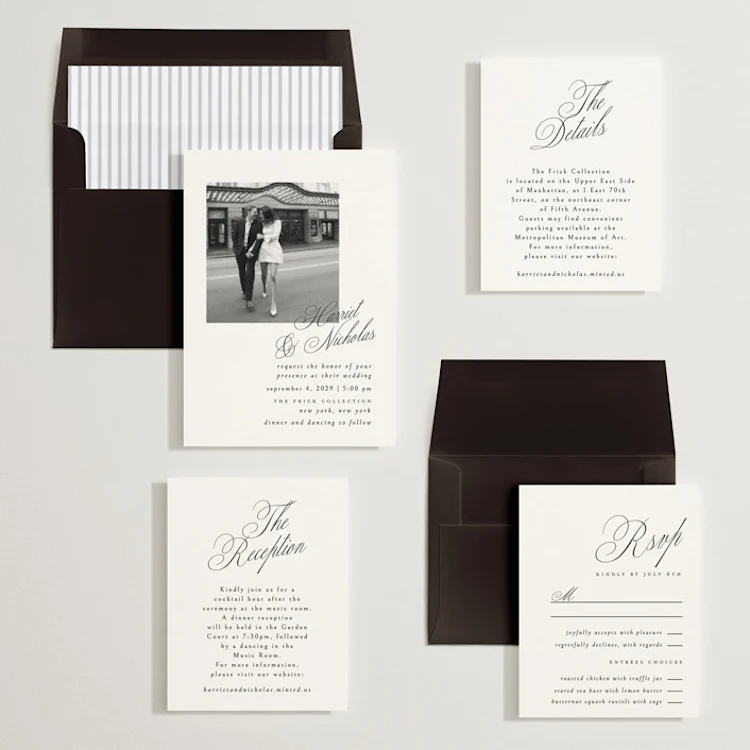
The Invitation Wording
Include a clear invitation for guests to attend your wedding ceremony. This can be traditional, casual, religious or modern, depending on the tone of your celebration.
For example:
- Request the honor of your presence
- Request the pleasure of your company
- Invite you to celebrate their marriage
- Would love for you to join them as they say I do
Choose wording that sounds like you. You don’t have to use formal language just because you’re sending printed invitations.
Need help choosing the right wording? Here’s a helpful guide to wedding invitation wording and etiquette, including traditional phrases, modern wording and what to say when you’re hosting your own wedding.
The Wedding Date
Include the full wedding date, including the month, day and year. You can spell out the date for a traditional look or use a more relaxed format for a casual celebration.
For example:
- Saturday, the twentieth of June, two thousand twenty-nine
- Saturday, June 23, 2029
Including the day of the week is helpful, too. It gives guests another way to confirm the date when they’re making travel plans.
The Ceremony Start Time
Always include the ceremony start time. Be specific so guests know when they should arrive.
If your ceremony begins at 4:00 p.m., you might print:
Four o’clock in the afternoon
or simply:
4:00 p.m.
If you’d like guests to arrive early, you can mention an arrival recommendation on a details card or wedding website. The invitation should still make the actual ceremony time clear.
The Wedding Venue Name and Location
Include the name of the ceremony venue and its city and state. If the venue is unfamiliar or difficult to find, provide the full street address on a details card or your wedding website.
For example:
The Observatory at Edison House
Detroit, Michigan
Make sure the venue name is written exactly as it appears officially. Guests should be able to find the location easily when searching for directions.
Once you have your wording figured out, you can start choosing a design. Here’s how to coordinate your wedding invitations with your wedding colors without making everything look too matchy-matchy.
The Reception Information
If your reception takes place at the same venue immediately after the ceremony, a simple line on the main invitation is usually enough.
For example:
Reception to follow
If the reception is at a different location, include its venue name and address on a separate reception card or details card. You can also direct guests to your wedding website for transportation and timing information.
What Else Should Be Included in a Wedding Invitation Suite?
The main invitation covers the essentials, but you may need a few additional pieces to help guests plan their attendance. These are often called enclosure cards or insert cards.
You don’t need to order every possible insert. Choose the ones that provide information your guests will need.
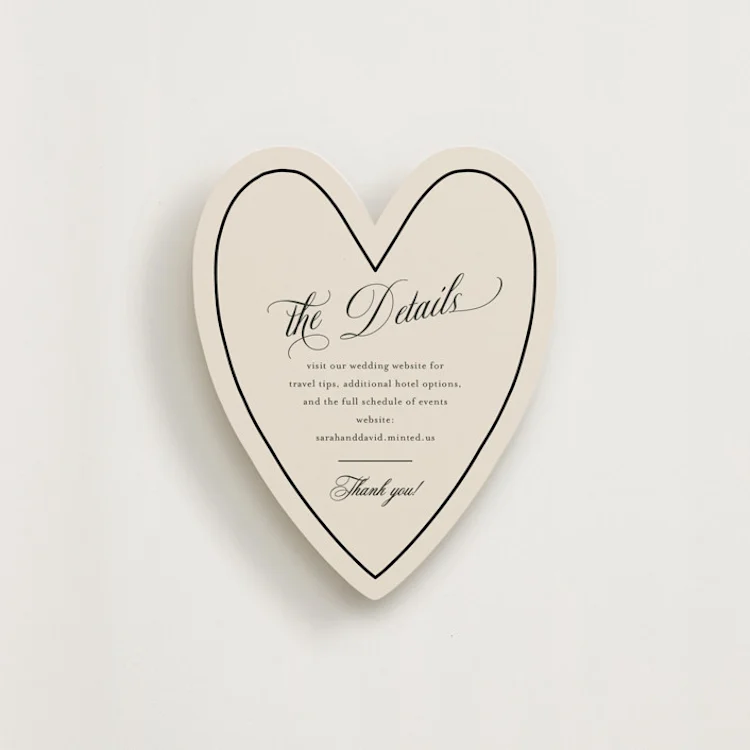
RSVP Card or Online RSVP Instructions
Guests need a clear way to tell you whether they’ll attend. Traditionally, couples include a printed response card with a stamped return envelope. Today, online RSVPs are another convenient option.
If you’re using a printed RSVP card, include:
- The guest’s name or a space for their name
- A way to accept or decline the invitation
- A response deadline
- A meal selection, if guests need to choose one
- Any dietary information you need to collect
If guests are responding online, include the wedding website address and clear instructions. You may also provide a QR code that takes guests directly to the RSVP page.
Helpful tip: Set your RSVP deadline far enough ahead of the wedding to give you time to provide final guest counts to your caterer and venue. Check those deadlines before choosing the date printed on your response card.
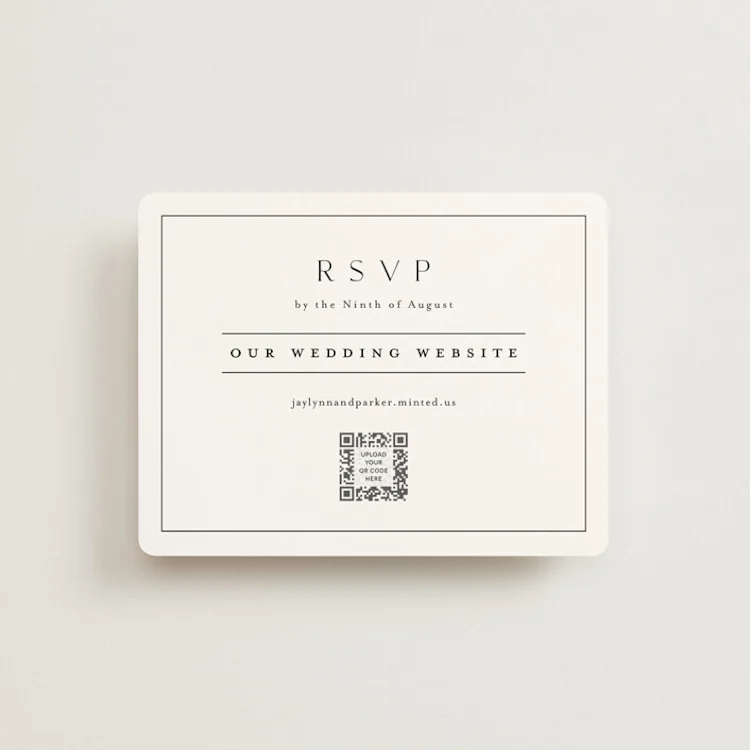
Details or Enclosure Card
A details card is a great place for information that doesn’t fit on the main invitation. It keeps your invitation looking clean while giving guests the practical information they need.
Depending on your wedding, this card might include:
- Hotel room blocks and accommodation information
- Transportation or shuttle details
- Parking instructions
- Directions to the ceremony or reception
- Wedding website address
- Schedule of wedding weekend events
- Dress code information
If you have a lot of information to share, your wedding website can do most of the work. Include the website address on the details card so guests know where to find the full schedule, travel information and answers to common questions.
Separate Reception Card
A separate reception card is useful when your reception takes place at a different venue or at a different time from your ceremony.
Include the reception venue, address and start time. If transportation is provided between locations, you can mention that here or on your details card.
If your ceremony and reception are at the same venue and the reception immediately follows, you probably don’t need a separate card. A simple reception line on the main invitation will do.
Accommodation and Travel Information
Hosting a destination wedding or expecting guests to travel? Make their planning easier by sharing the information they’ll need before the wedding.
You may want to include:
- Hotel room block information
- Hotel booking deadlines
- Airport information
- Transportation or shuttle schedules
- Rental car suggestions
- Directions to the venue
For a destination wedding, a wedding website is especially useful. You can provide travel recommendations, a weekend itinerary and local information without trying to squeeze everything onto a tiny enclosure card.
Dress Code Information
If your wedding has a specific dress code, let guests know ahead of time. This is particularly helpful for black-tie weddings, outdoor celebrations or events where the setting affects what guests should wear.
You can include a short note such as:
- Black tie
- Formal attire
- Cocktail attire
- Garden party attire
If guests need more guidance, your wedding website is a good place to explain what the dress code means and whether there are any practical considerations, such as grass, sand or uneven terrain.
What Goes on the Wedding Invitation Envelope?
Don’t forget the envelope! It’s the first thing guests see when your invitation arrives, and addressing it correctly helps make sure everyone knows who is invited.
Guest Names
Address the invitation to the people you are inviting. If you’re inviting a couple, include both names. If children are invited, you can list their names on the envelope or use an appropriate family designation.
If children are not invited, addressing the invitation only to the parents helps communicate who is included. For clarity, you can also use your RSVP card or wedding website to explain your guest policy politely.
Plus-Ones
If a guest is invited with a plus-one, make that clear on the invitation or envelope. You can address the envelope to the guest and their invited guest or use wording such as and guest when the additional guest’s name isn’t known.
For guests who are not receiving a plus-one, avoid using wording that suggests they may bring someone. Your RSVP process should also make it clear how many guests are included in each invitation.
Return Address
Include a return address on the envelope. This allows undeliverable invitations to be returned and helps guests know where to send a mailed RSVP card, if you’re including one.
If you’re using printed RSVP envelopes, remember to include the return address there, too.
Money-saving tip: you can get free return address printing on envelopes at Minted.
Postage
Make sure you have the correct postage for the complete invitation. Thick paper, multiple enclosure cards, wax seals, unusual shapes and square envelopes can affect postage requirements.
Before mailing your entire invitation order, take a fully assembled invitation to the post office and have it weighed. You don’t want a stack of invitations coming back because the postage was incorrect!
What Should You NOT Include on Wedding Invitations?
It’s tempting to include every detail, but a wedding invitation doesn’t need to answer every possible guest question. Keep the main card focused on the event itself and move extra information to your details card or wedding website.
Here are a few things to leave off the main invitation.
Registry Information
Traditionally, registry information does not belong on the wedding invitation. Guests should never feel that receiving an invitation comes with an expectation to purchase a gift.
Instead, share your registry on your wedding website. Close family and friends can also help spread the word when guests ask.
Too Many Wedding Weekend Details
If you’re hosting a welcome party, rehearsal dinner, farewell brunch or other wedding weekend events, you don’t need to squeeze every detail onto the main invitation.
Use a separate itinerary card or your wedding website to share the full schedule. If an event is only for certain guests, make sure the invitation or communication for that event goes to the appropriate people.
Long Directions and Extensive Travel Information
Full driving directions, multiple hotel options and long transportation instructions can make an invitation feel crowded. A details card can provide a short summary, while your wedding website can hold the complete information.
Unnecessary Personal Information
You don’t need to print personal phone numbers, private email addresses or other information that guests can access through your wedding website or RSVP process. Keep the printed suite focused on what guests need to attend.
What Should a Wedding Invitation Look Like? A Simple Example
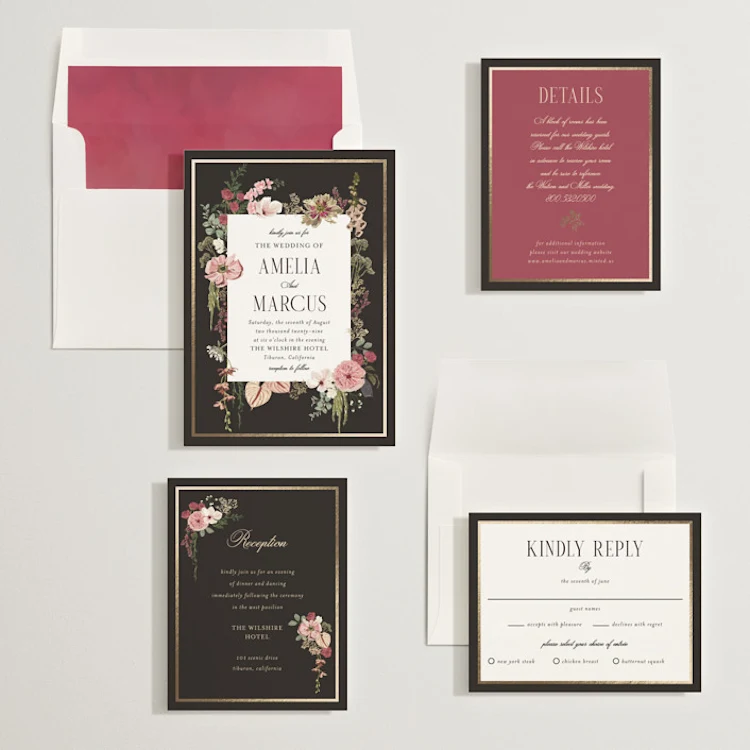
Not sure how all the pieces fit together? Here’s a basic example of the information you might include on a traditional wedding invitation.
Main invitation:
Together with their families
Anna Smith and Luke Jones
invite you to celebrate their marriage
Saturday, June 23, 2029
at four o’clock in the afternoon
The Observatory at Edison House
Detroit, Michigan
Reception to follow
RSVP card:
Please respond by May 20, 2029
Name(s): __________________
Joyfully accepts ___
Regretfully declines ___
Details card:
For hotel accommodations, directions, parking information and additional wedding details, please visit our wedding website: [website address]
Your own invitation may look completely different depending on your wedding style, venue and the information guests need. The important thing is that the essential details are easy to find.
Wedding Invitation Checklist: What to Include Before You Order
Before you approve your invitation proof, run through this checklist. It’s much easier to catch a missing date or incorrect address now than after 100 invitations arrive at your door!
- Couple’s names are spelled correctly.
- Host names are included if desired.
- Invitation wording is correct.
- Wedding date and day of the week are accurate.
- Ceremony start time is correct.
- Venue name and location are correct.
- Reception information is included, if needed.
- RSVP instructions and deadline are clear.
- Meal choices or dietary questions are included, if needed.
- Details card includes relevant travel, parking or accommodation information.
- Wedding website address and QR code work correctly.
- Dress code is included, if applicable.
- Guest names and mailing addresses are accurate.
- Return address is included.
- Postage has been confirmed for the fully assembled invitation suite.
One more thing: ask someone you trust to proofread the final invitation before you approve the order. A second set of eyes can catch spelling mistakes, missing information and little details that are easy to overlook when you’ve been staring at the same design for days.
When Should You Send Wedding Invitations?
Once you’ve chosen your design and finalized the wording, you’ll need to decide when to mail your invitations.
For many weddings, invitations are mailed about six to eight weeks before the wedding. If you’re planning a destination wedding or have many guests traveling from out of town, you may want to send them earlier. Save-the-dates are helpful for giving guests advance notice, especially when travel is involved.
Give yourself enough time to collect RSVPs, follow up with guests who haven’t responded and provide your final headcount to your venue and caterer. Your venue and vendors may have their own deadlines, so work backward from those dates when setting your RSVP deadline.
Frequently Asked Questions About Wedding Invitation Details
What is required on a wedding invitation?
At a minimum, your wedding invitation should include the names of the couple, an invitation to attend, the wedding date, ceremony start time and venue location. Include reception information on the main invitation or a separate card, depending on your plans.
Do wedding invitations need an RSVP card?
No. A printed RSVP card is traditional, but online RSVPs are perfectly practical, too. If you’re collecting responses online, include your wedding website address or a QR code with clear instructions and a response deadline.
How many pieces are included in a wedding invitation suite?
A traditional wedding invitation suite typically includes the main invitation, an RSVP card and envelope, and one details or enclosure card. You may also include a separate reception card, depending on your wedding plans. The exact number of pieces depends on how much information your guests need and whether you’re using a wedding website for additional details.
Should you include the wedding website on the invitation?
You can include your wedding website address on a separate details card or enclosure card. This is a convenient place to share hotel information, directions, travel recommendations, the full wedding schedule and registry information.
Should registry information be included with wedding invitations?
It’s best to keep registry information off the formal wedding invitation and its enclosure cards. Share your registry on your wedding website instead. Guests who want to give a gift can find the information there.
Do you need a separate reception card?
Not always. If the reception takes place at the same venue immediately after the ceremony, you can simply write “Reception to follow” on the main invitation. A separate reception card is helpful when the reception is at another location or begins at a different time.
Do wedding invitations need full addresses?
Include the venue name and location on the main invitation. Adding the full street address is helpful when the venue may be unfamiliar or difficult to find. You can also include the full address, parking instructions and directions on a details card or wedding website.
When should wedding invitations be ordered?
Order your invitations early enough to allow time for proofing, printing, assembly and mailing. Build in extra time if you’re ordering custom stationery, specialty printing or invitations with multiple enclosure cards. If you’re unsure about a design, request free wedding invitation samples before committing to a full order.
Ready to Choose Your Wedding Invitations?
Now that you know what to include in your wedding invitations, you can start choosing a design and putting together the pieces you’ll need. Keep the main invitation focused on the most important details, use enclosure cards for helpful extras and send guests to your wedding website for anything that needs more explanation.
Before you place your order, browse these helpful invitation resources:
- Best Wedding Invitation Websites
- Where to Get Free Wedding Invitation Samples
- Affordable Wedding Invitations That Don’t Look Cheap
- Wedding Invitation Wording and Etiquette
- Should Your Wedding Invitations Match Your Wedding Colors?
Your invitations are one of the first glimpses guests get of your wedding. Make them beautiful, make the information easy to follow and give yourself time to check every detail before they go in the mail. You’ve got this!