

Picture the scene: your guests walk into the ceremony, and one by one, a greeter drapes a fresh orchid lei over each person’s shoulders with both hands. Something changes the moment the flowers settle. The room feels less like a wedding venue and more like somewhere tropical. Every guest feels welcomed, specifically and personally, before the ceremony has even begun.
That’s how Hawaiian leis impact a wedding ceremony. It shifts the feel from a standard walk-down-the-aisle into something warmer, more generous, and alive with meaning. In Hawaiian culture, leis symbolize aloha, respect, and the honoring of someone you love. Giving one is giving a physical blessing.
Maybe you vacationed in Hawaii. Maybe your family has roots there.
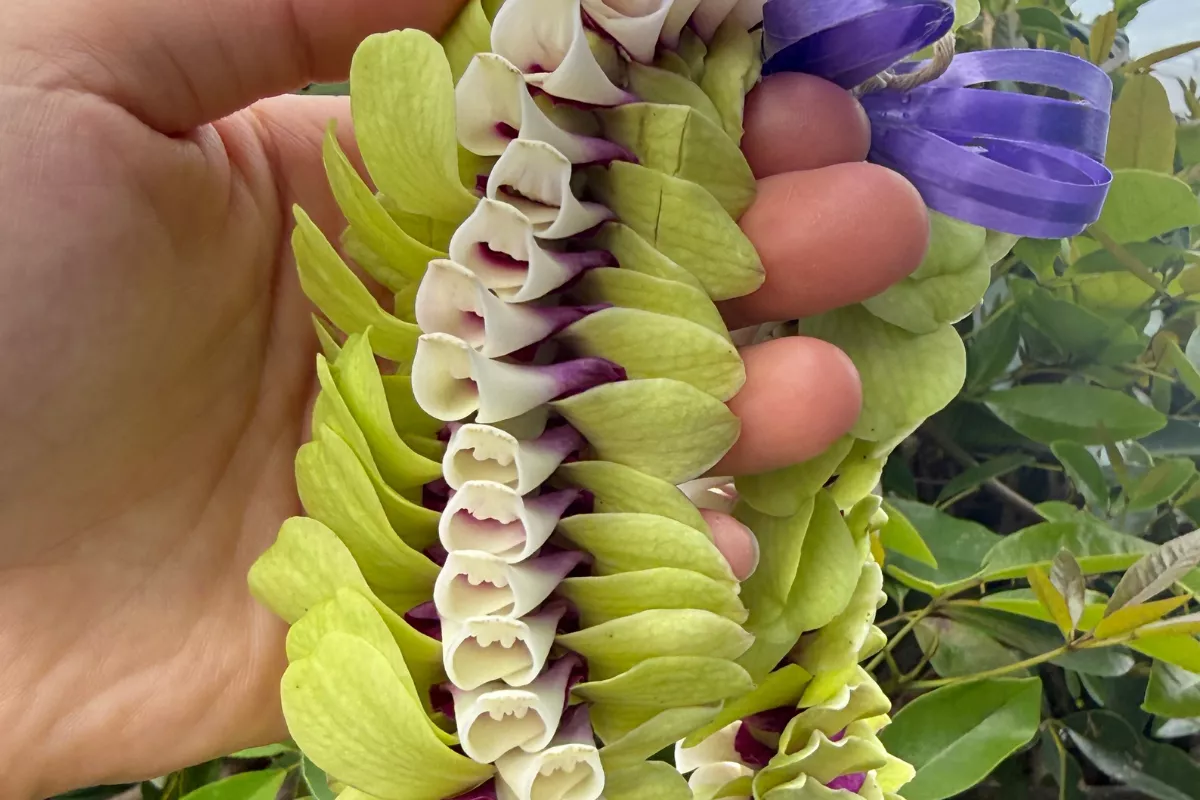
Whatever brought you here, you hit the same wall every couple marrying outside Hawaii hits: nothing in your planning binder explains how Hawaiian wedding leis actually work. Who wears one? Can every guest receive one? When should you order, and will fresh flowers survive the trip to Ohio, Vermont, or Key West?
I asked Ann Boots, co-founder of FlowerLeis.com and a Hawaii-raised lei specialist who has spent 10 years helping mainland couples select Hawaiian lei for ceremonies, to walk me through what matters most.
Who Wears a Lei in a Hawaiian Wedding Ceremony?
The tradition is generous. The bride and groom wear leis. So do the officiant, the parents and grandparents, the bridal party, and sometimes every guest.
The Bride
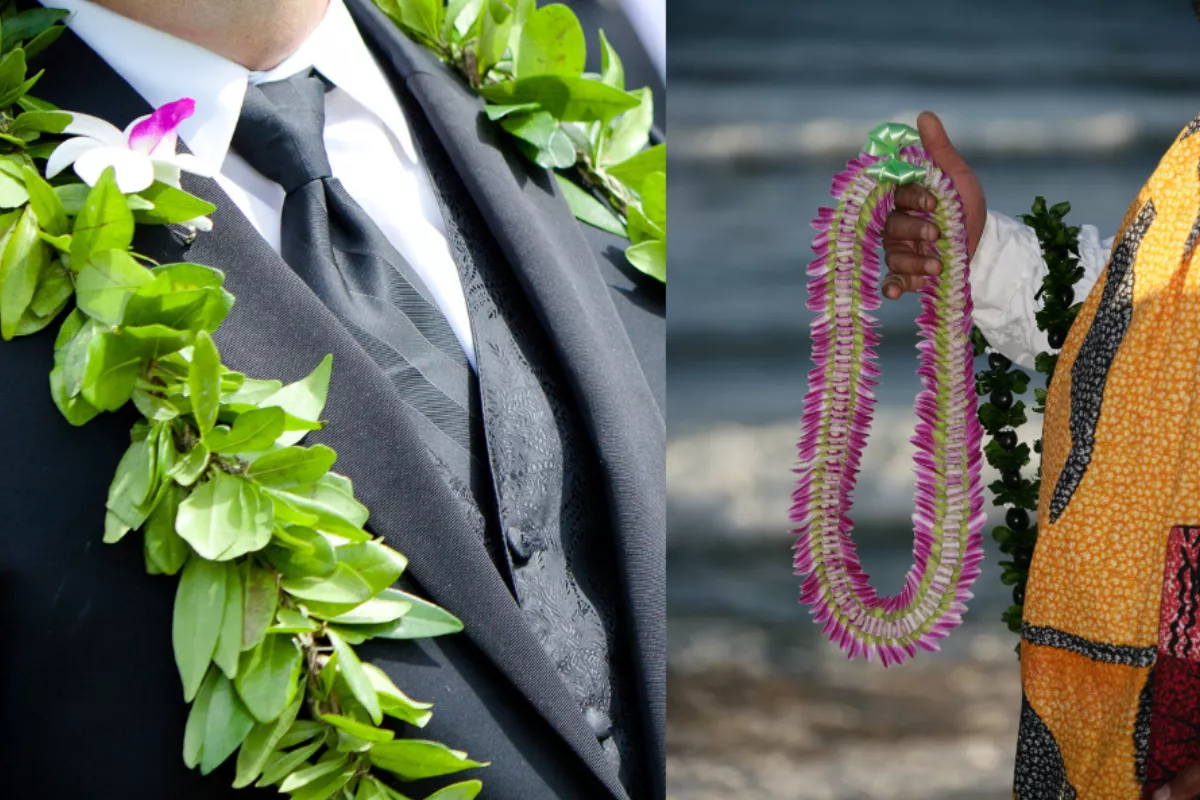
The bride traditionally wears a white lei, most often tuberose, pikake, or white orchid. Tuberose and pikake are fragrant, carrying a soft, sweet scent many brides remember years later as a sensory anchor of the day. White orchids are scentless but hold their shape beautifully through long ceremonies and photograph cleanly against any dress color.
The Groom
The groom wears a maile style lei, usually open-ended and draping over the shoulders rather than closing in a full circle.
“A nice touch is adding white orchids or tuberose to the groom’s maile so it echoes what the bride is wearing,” Ann says. “It ties them together visually without looking matchy.”
The Officiant
The officiant also wears a maile style lei. Hilo maile and ti leaf maile are the most traditional choices. The officiant’s lei marks their role and distinguishes them from guests wearing lighter florals.
Bridal Party
Bridesmaids and groomsmen wear leis that complement your wedding colors. White orchid leis work with almost any palette. Classic purple orchid leis add depth to sage green, dusty blue, or cream bridal party colors. Leis with white orchid accents bridge the gap if your bridesmaids wear varied shades.
Mothers of the Couple
Mothers of the bride and groom traditionally receive a premium orchid lei with traditional heritage weaves. This is a moment of honor, and the bride or groom typically presents the lei at the start of the ceremony.
Flower Girl
The flower girl carries a basket of loose orchid heads and sprinkles them down the aisle ahead of the bride. Worth noting, because many couples assume the flower girl wears her own small lei. The traditional role in a Hawaiian ceremony is the aisle scatter.
Guests
Every guest, if you want the full ceremony effect. This is where the classic single strand orchid lei shines. Couples who want the feel of their wedding to shift from the first moment order bulk orchid leis and greet each arriving guest with one.
“Once a guest has been greeted with a lei, their whole experience of your wedding starts differently,” Ann says. “They know they’re at something special.”
How Far in Advance Should You Order Your Wedding Leis?
Three weeks minimum. Four to six weeks is better, depending on the types and number of leis.
“Place your order at least three weeks out and we can secure the specific lei and flowers you want,” Ann says. “Flowers are a crop. They’re perishable, and sometimes weather or harvest timing changes what’s available. The three-week window gives us time to source exactly what you asked for. Though, it’s also possible to ship them out within a day’s notice.”
Always have a substitution plan in place. A tropical storm in Hawaii or a difficult growing season affects flower availability even for orders placed months in advance. A good florist will call you before making any substitution and walk you through comparable options.
For weddings between May and September, order early. Summer is peak season for Hawaiian weddings and graduations, and the same flowers you want are in high demand across the board.
Will Fresh Hawaiian Leis Survive the Trip?
Yes, with the right precautions. Packed well, fresh Hawaiian leis stay fresh for at least 48 hours after they leave the florist. FlowerLeis.com uses cold packs in every shipment to keep flowers at safe transit temperatures.
The caveats matter. Cold packs lose effectiveness faster in summer heat. If your wedding falls between June and August, or if your venue sits in a hot-weather region like Arizona, Texas, or the Florida Keys, overnight shipping is strongly recommended.
For fragrant leis like tuberose and pikake, overnight shipping is the safer default regardless of season. These flowers are beautiful but highly perishable.
One detail many couples miss: tell your resort or venue coordinator to expect a floral delivery on your wedding date or the day before.
“Most venue coordinators will store the leis in their refrigerators as soon as the box arrives,” Ann says. “Without the heads-up, the box often sits on a loading dock or at a front desk at room temperature.”
What Should You Ask Your Lei Florist Before Ordering?
- What is your substitution policy if flowers are unavailable? The answer should include a direct conversation or approval before changes are made.
- How are leis packaged for shipping, and what delivery timing do you recommend? Look for cold packs, insulated boxes, and next-day delivery guidance.
- Can you coordinate delivery timing with my venue? Experienced florists handle this regularly.
- What flowers are in season for my wedding date? Direct Hawaii sourcing usually allows specific answers.
A florist who welcomes these questions is someone you can trust with something as meaningful as your wedding lei.
Bringing Hawaii Home
Incorporating Hawaiian lei into your wedding ceremony translates naturally to a wedding held anywhere in the country when the planning respects both the tradition and the logistics. Know who wears what. Order early. Ship overnight when the season calls for it. Loop in your venue coordinator.
Done well, the moment you exchange leis with your partner, or the moment your guests walk in and realize they’re about to be greeted with flowers, becomes one of the memories your wedding photos do not quite capture. Everyone in the room will remember it.
To plan your Hawaiian wedding lei order, visit FlowerLeis.com.
This is a guest post.