
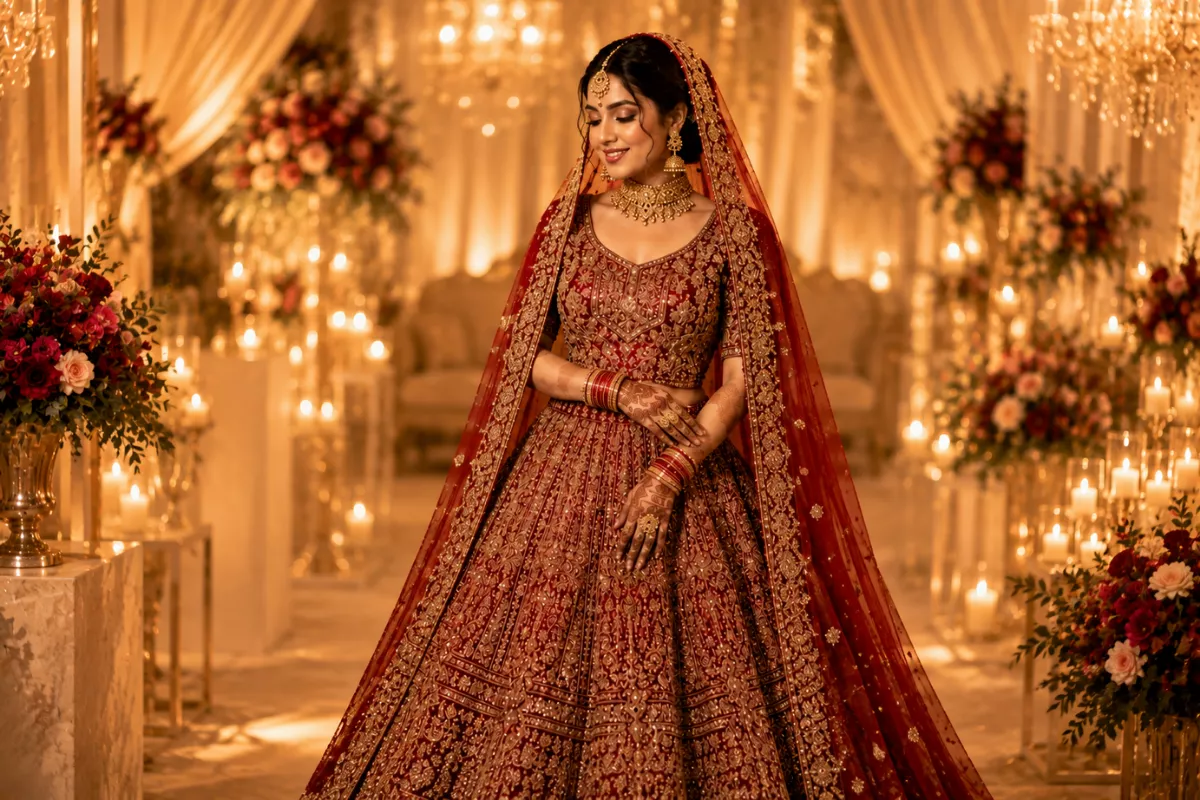
A bridal lehenga is a three-piece outfit made up of a lehenga skirt, choli, and dupatta. Together, these pieces create one of the most recognizable South Asian bridal looks, but choosing the right one involves more than falling in love with a picture on Instagram.
The silhouette affects how the skirt moves, the embroidery affects its look, and the choli and dupatta change how the whole outfit sits. Add a long wedding day, multiple events, photographs from every possible angle, and a few strong opinions from family, and the decision gets complicated quickly.
This guide will help you choose a bridal lehenga that suits your wedding, your personal style, and the way you actually want to spend the day.
What is a Lehenga?
A lehenga is a coordinated three-piece outfit commonly worn for South Asian weddings and celebrations. Understanding each piece helps when you are shopping, customizing, or discussing adjustments with a bridal studio.
Parts of Lehengas
- Lehenga (skirt). The skirt forms the base of the outfit that sits at or below the natural waist and falls to the floor. Its flare, length, fabric, and embroidery affect both movement and overall appearance.
- Choli (bodice). The choli is the fitted, cropped top that complements the skirt. The cut, neckline, and sleeve length vary widely, from high-neck and full-sleeve to off-shoulder and backless. The choli needs precise fitting, because even small sizing issues show in photographs.
- Dupatta (drape). A length of fabric, usually matched or coordinated with the skirt, worn over the head, across the shoulders, or draped over both arms. Dupatta styling depends on the ceremony and personal preference.
Because these pieces work together, do not judge a lehenga by the skirt alone. Try to see the complete combination whenever possible.
Different Lehenga Silhouettes for Weddings
The skirt silhouette is the biggest visual decision, which affects how the outfit feels to wear.
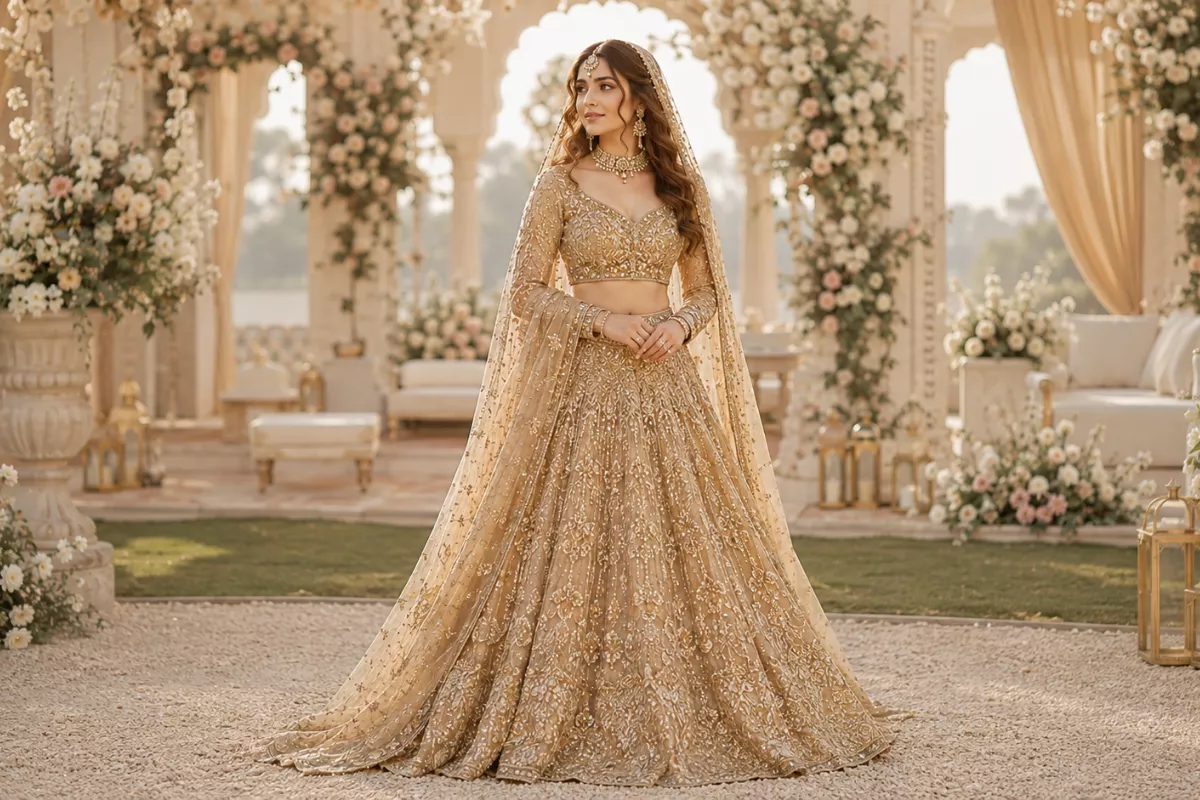
- A-line. The skirt follows the waist before gradually widening toward the hem, offering a balanced volume and movement.
- Circular or flared. A fuller, more dramatic skirt with significantly more fabric. The flare creates volume and movement, which looks striking in photos and on a dance floor. It is heavier than an A-line, so fabric choice and the length of your day both matter.
- Mermaid or fishtail. Fitted through the hips and thighs, flaring below the knee. This silhouette is more structured and modern. It suits brides who want a closer fit and are comfortable with less range of movement in the skirt.
- Paneled. A multi-panel construction that falls straight and structured. Less common for bridal wear, but increasingly popular for receptions and contemporary weddings where the bride wants a contemporary silhouette.
If you are unsure where to begin, try several silhouettes rather than choosing from photographs alone. Walk, sit, and turn in each one. You may be surprised by which shape feels right in person.
Which Lehenga is Best For a Bride?
The best bridal lehenga is one that suits your silhouette, embellishments, and wedding-day length.
A heavily embellished red bridal lehenga can create a striking look, but additional handwork and gold traditional motifs can also add considerable weight. If you will be dancing, meeting guests, or moving between venues for hours, think about how the wedding outfit feels after the first hour, not just how it looks in the fitting room.
The silhouette matters for the big day. A fuller skirt creates more movement, while a more streamlined shape can have a different visual effect. Look at the skirt from different angles and walk around before making your decision.
At specialized bridal studios like Raaja Raani Bridal in Brampton, Ontario, you can browse bridal lehengas in a range of silhouettes and embroidery styles, with many pieces available to customize in size and color.
Does Fabric Matter for Bridal Lehengas?
Yes. Fabric weight affects everything: how the skirt moves, how heavy the outfit feels over several hours, and how the embroidery sits on the garment.
Heavier fabrics like raw silk, velvet, and brocade give the skirt structure and hold embroidery well. They are a strong choice for winter or evening ceremonies. Lighter, breathable fabrics like georgette, organza, and net create a softer fall and more movement, so they’re easier to wear on a long day in warm weather.
How Much Embroidery Should A Bridal Lehenga Have?
The amount of embroidery should reflect the look you want and how comfortable you need to be throughout the day.
Embroidery styles such as zari work (metallic thread embroidery), gota patti (appliqué ribbon work), and resham (silk thread) add texture and dimension. You can choose detailed all-over work, a heavily embroidered border, or concentrated embellishment on the blouse.
More embroidery generally means more weight, so consider practicality before choosing the most heavily worked piece you see. When trying on pieces, lift the skirt, walk in it, sit down, and move your arms. If it already feels cumbersome in the fitting room, imagine wearing it for another six hours at the main event.
How Should You Choose The Colour Of A Wedding Lehenga?
The color depends on your wedding aesthetic, personal preference, and the specific traditions you are following.
Deep reds, maroons, magentas, and other vibrant shades remain popular choices for Indian bridal lehengas, offering traditional elegance. Pastel tones, particularly blush, mint, and lavender, have gained ground in recent years, especially among modern brides who want a chic look for daytime reception and destination weddings. Yellow, orange, green, and pink appear fresh and elegant for haldi and sangeets.
If colour is a big part of your overall wedding design, you can also coordinate the lehenga with florals, décor, or your partner’s outfit without making every element identical. For more inspiration, browse our guide to colorful wedding dresses.
What to Wear Under a Bridal Lehenga
Nobody talks about this part, but it is the difference between looking composed at hour eight and tugging at your waistband every fifteen minutes.
Under the choli. Skip the regular bra. A well-fitting strapless or low-back style that matches the neckline is the baseline, but the better option is to get internal support, such as built-in cups or a structured lining stitched directly into the choli. Retrofitting support into a completed choli is possible but messier and less clean.
Under the skirt. A simple cotton or silk petticoat gives the lehenga its shape and keeps the fabric from clinging to your legs. If you want extra volume in the flare, ask for a cancan petticoat, which has stiffening layers that push the skirt outward. Get the petticoat hemmed to work with your actual shoes, not in bare feet.
Footwear. You will be standing, walking, sitting, and probably dancing for hours. Flat juttis or a low block heel are the most practical choice, but wear them at your final fitting so the hem is set to the right height. If you plan to change the footwear during the celebration, our guide to comfortable wedding flats is worth bookmarking.
Lehenga vs. Saree: Which One Works as an Indian Wedding Dress?
Both the lehenga and the saree are traditional choices for South Asian brides, but they create very different dressing experiences.
A saree is wrapped and draped around the body, while a lehenga is stitched and structured. With a lehenga, you step into the skirt and put on the choli, so the silhouette generally stays in place more easily.
If you want maximum movement, a wedding lehenga may be the simpler choice. If you love the fluidity and drape of wrapped fabric, a saree may feel more natural.
There is no rule that says you have to pick one for the entire day. Some Indian brides wear a lehenga choli for the wedding ceremony and change into a lighter saree for the reception.
Can You Wear a Lehenga To a Wedding As a Guest?
Yes, a lehenga can be appropriate for a wedding guest, provided the styling suits the event and does not compete with the couple’s bridal looks.
A wedding guest lehenga should feature intricate embroidery and more restrained styling, particularly for daytime or smaller celebrations. When in doubt, check the invitation or ask the couple or wedding party about the expected dress code.
When To Start Shopping For Bridal Lehenga
Most brides underestimate how early they should begin. If you want customization, start shopping at least 6 to 8 months before the wedding. Color changes, size adjustments, and any handwork modifications all add production time.
Even without customization, you will likely visit several studios, try multiple silhouettes, and refine your preferences before making a decision. Give yourself room for that process, especially if family members want to be part of the shopping experience.
Your lehenga should survive more than the first mirror selfie. Walk in it, sit in it, dance in it, and make sure you still love it when the excitement settles.
This is a partnered post.