
One of the first things guests want to know when they arrive at your wedding reception is surprisingly simple: where am I sitting?
That’s where a wedding seating chart comes in.
A seating chart gives guests one easy place to find their name, see their table number, and head to their seats without having to wander around the reception looking for a spot. Or saving spots with purses. Or pulling chairs over to other tables. Ay-yi-yi.
Thankfully, your seating chart doesn’t have to look boring. It can actually add to your decor.
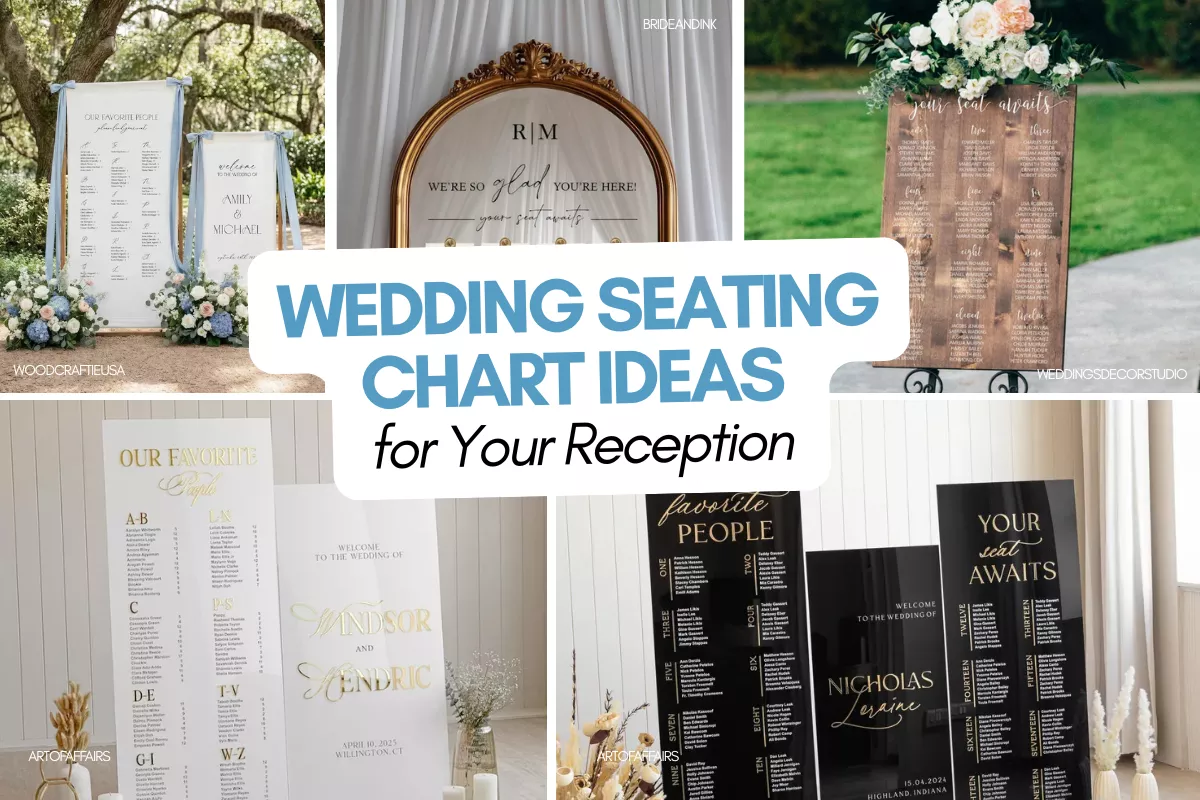
From elegant acrylic signs and mirrors to window panes, fabric displays, printable signs, and creative DIY ideas, there are so many pretty ways to organize your guests.
In this guide, we’re covering wedding seating chart ideas, plus how to make your seating chart, whether you actually need one, where to put it, and the difference between a seating chart, escort cards, and place cards.
► A seating chart is just one piece of the reception puzzle, and it can be surprisingly important. If you’re working through all those little details, our wedding reception essentials checklist covers what else you’ll want to plan, from guest books and card boxes to reception signs, table decor, and more.
What Is a Wedding Seating Chart?
A wedding seating chart is a display that tells guests which table they’re assigned to at the reception.
For example, a guest might find their name listed under Table 8. They then head to Table 8 and choose an open seat.
That’s the important distinction: a seating chart usually assigns guests to a table, not a specific chair.
If you want every guest to have a specific seat, you’ll typically use place cards in addition to your seating chart.
A seating chart can be one large display, several smaller signs, a wall of cards, or pretty much anything else that clearly tells guests where they’re sitting.
Do You Need a Seating Chart or Escort Cards?
Both can tell guests where they’re sitting, but they work a little differently. A seating chart is one display that lists everyone’s table assignment, while escort cards are individual cards that tell each guest which table to go to.
If you want one central display that guests can check as they enter the reception, a seating chart is the simplest choice. If you like the idea of individual cards or want to incorporate favors into the seating assignment, escort cards may be a better fit.
There’s no wrong answer: it mostly comes down to your guest list, reception style, and the look you want.
Do You Need a Wedding Seating Chart?
Nope. Not every wedding needs one.
If you’re having a small, casual wedding with open seating, you may not need to assign tables at all. Guests can simply find a seat wherever they’d like.
But a seating chart can be really helpful if you’re having a larger reception, serving a seated dinner, or want to make sure certain guests are seated together.
You’ll probably want one if:
- You have a large guest list.
- Your venue has assigned reception tables.
- You’re serving a plated or seated meal.
- You want to seat families and friend groups together.
- You need to account for complicated family dynamics.
- You have guests with accessibility or mobility needs.
- You want to prevent the awkward “Is anyone sitting here?” game.
If you’re on the fence, don’t worry. We break down the pros and cons here: seating chart or no seating chart?
Wedding Seating Chart vs. Assigned Seating
These sound like the same thing, but there’s a small difference.
A seating chart tells a guest which table to sit at. Once they get to the table, they can choose any available chair.
Assigned seating takes it one step further. Each guest has a specific seat waiting for them.
Most couples don’t need to assign individual seats. Assigning tables gives you the organization you want without requiring you to figure out which chair Aunt Susan should sit in.
10 Wedding Seating Chart Ideas
Now for the fun part! Here are some of our favorite wedding seating chart ideas, from classic and elegant to creative and completely DIY-able.
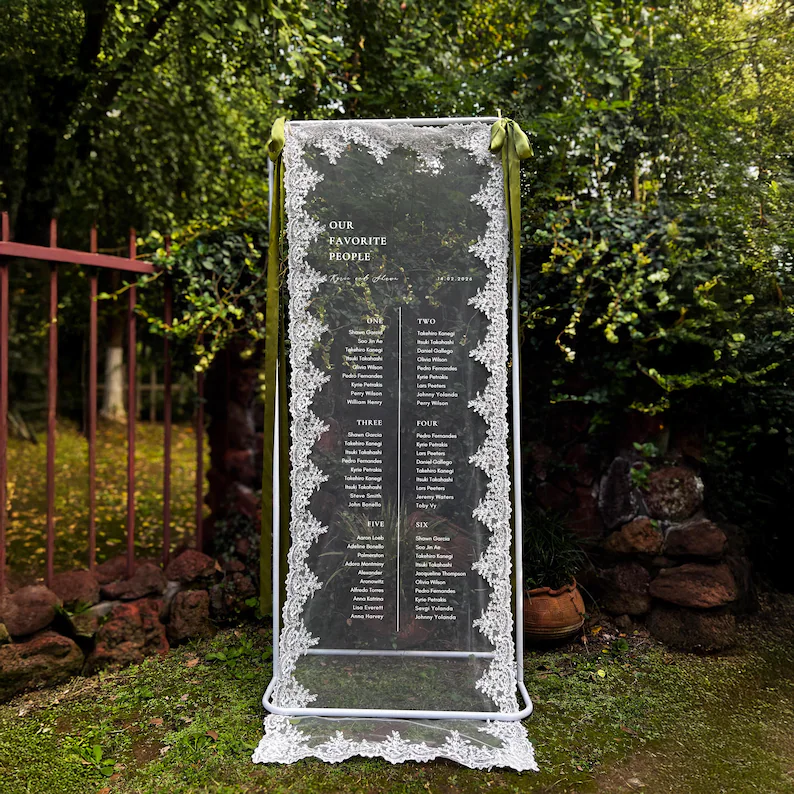
1. Acrylic Wedding Seating Chart
Acrylic is one of those materials that can make a seating chart feel instantly modern and polished.
Use a clear acrylic panel with simple lettering, then add flowers or greenery around the edges. You can keep it minimalist with black lettering or coordinate the text with your wedding colors.
It’s especially pretty for modern, elegant, and minimalist weddings.
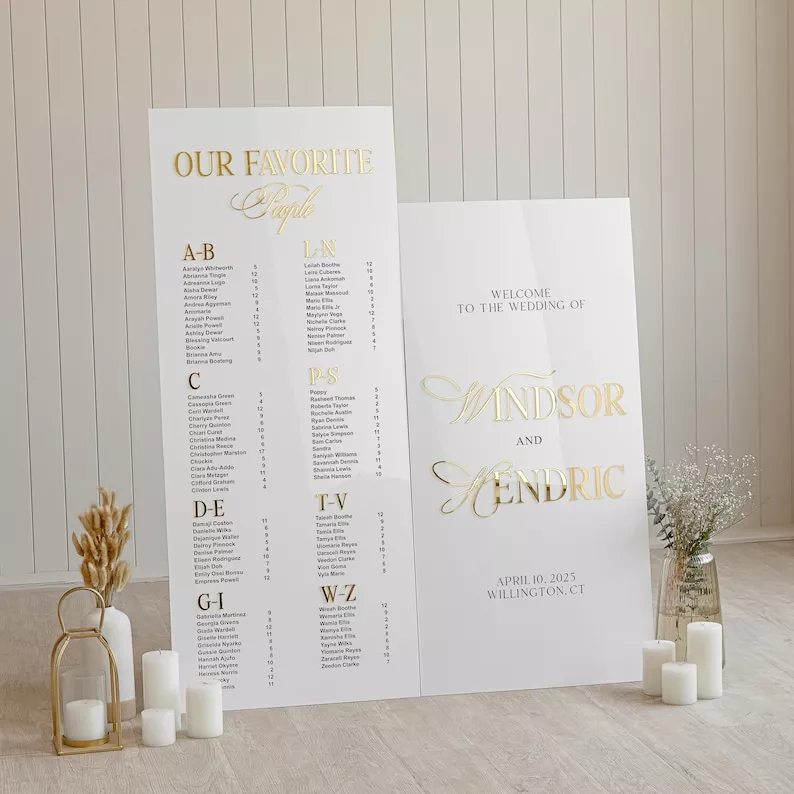
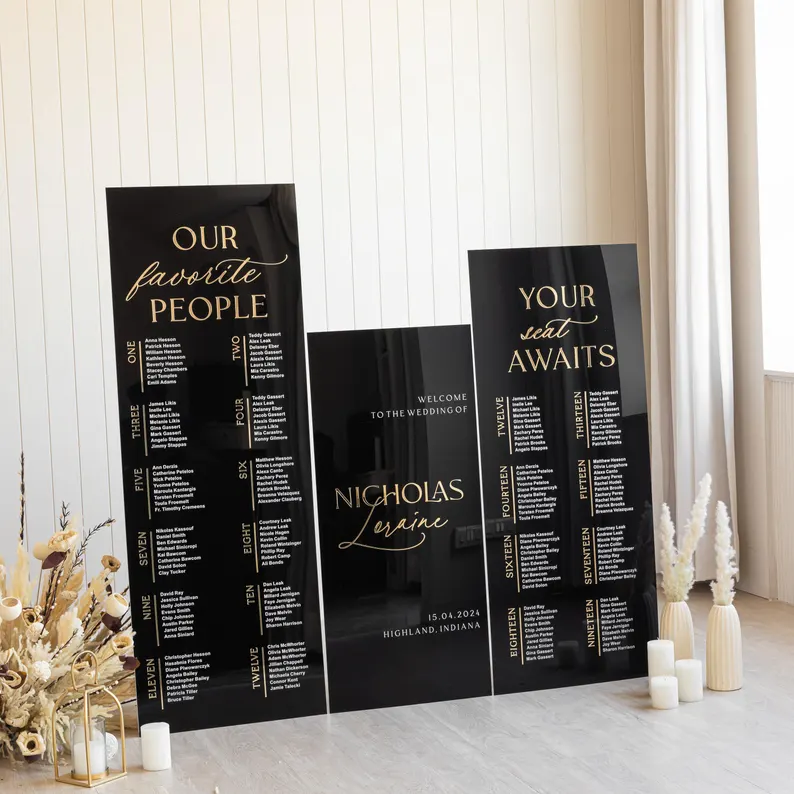
They offer many different color options to suit your wedding style.
2. Mirror Seating Chart
A mirror is such a pretty option for a romantic reception.
Have your guests’ names and table numbers written directly onto the mirror, then add flowers, greenery, or candles around the display.
Bonus: after the wedding, the mirror can become a home decor piece instead of disappearing into the wedding-storage abyss.
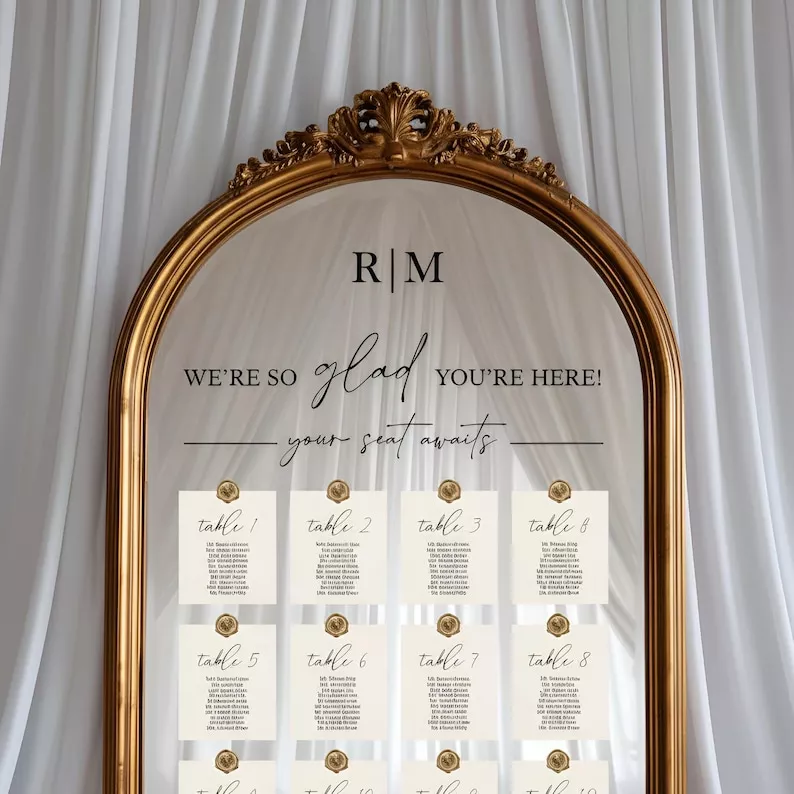
Note: This is the decal; you’ll want to also get a large mirror to use the decal.
3. Fabric Wedding Seating Chart
For something softer, try a fabric seating chart.
Linen, cotton, canvas, and other textiles work beautifully for garden, boho, rustic, and outdoor weddings. A fabric sign also gives you a little more room to play with hand-lettered or relaxed typography.
Pair it with a wooden frame or hanging rod for an easy display.
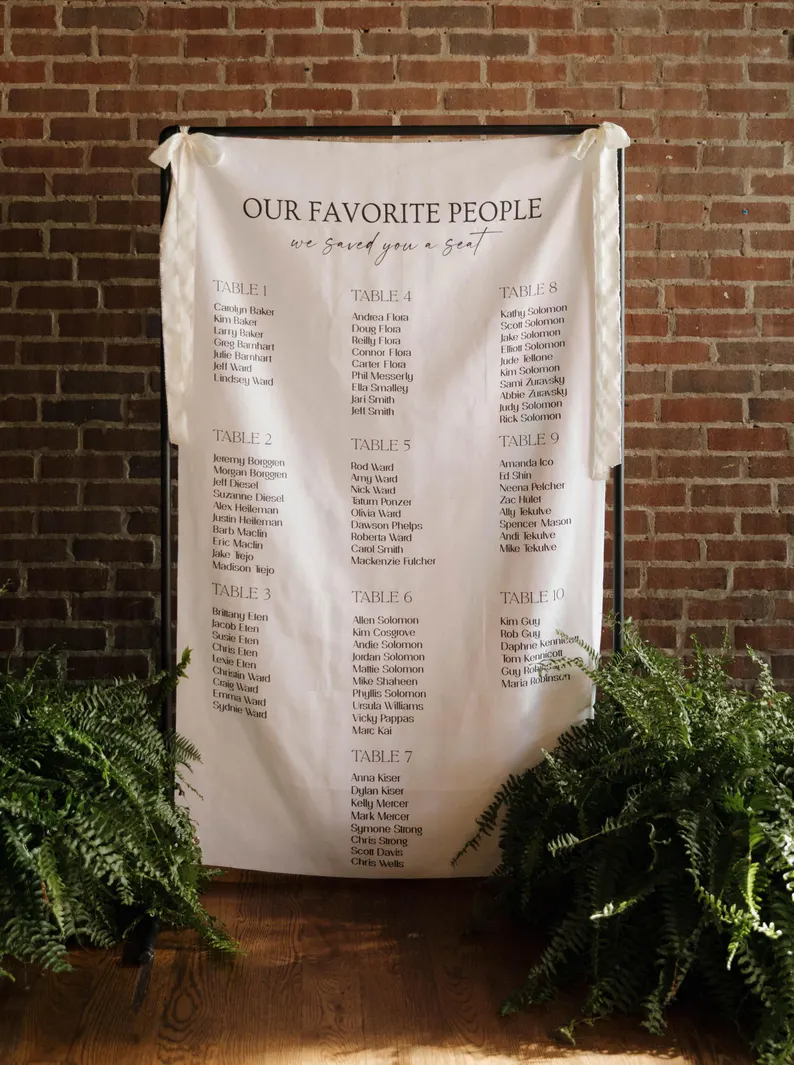
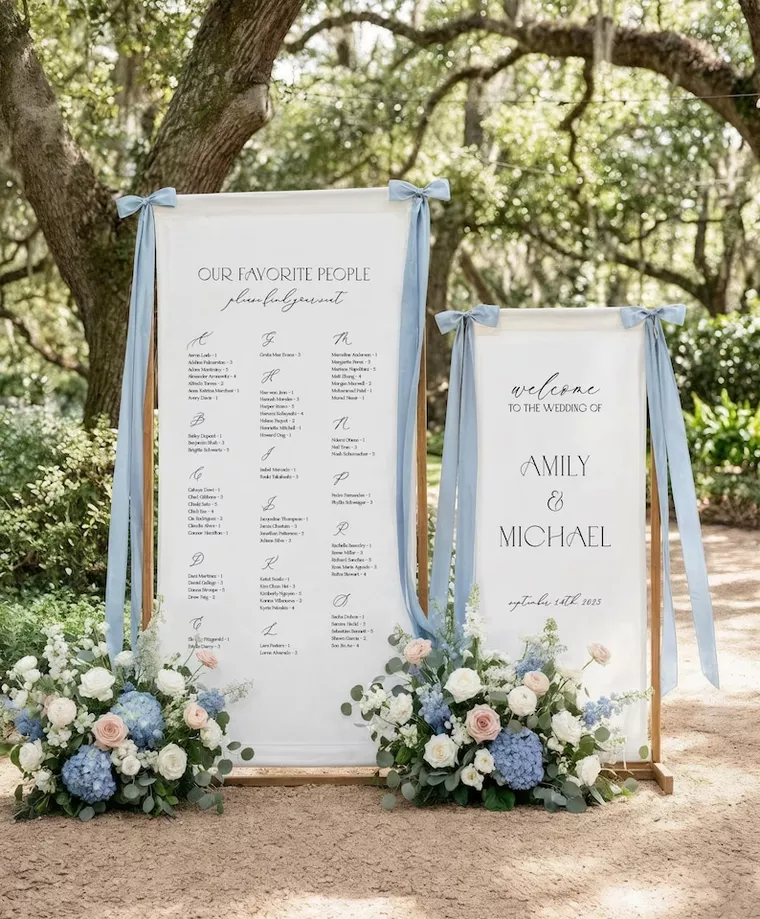
Note: Don’t forget to get this adjustable sign holder to display it.
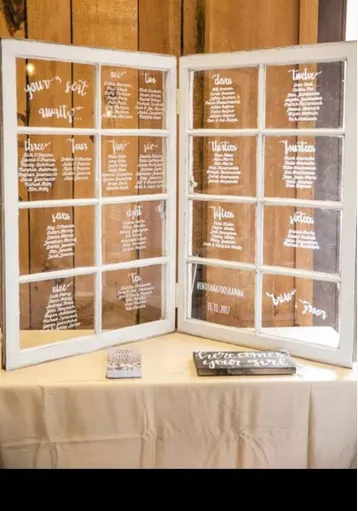
4. Window Pane Seating Chart
Have an old window sitting around? Don’t throw it away just yet.
A vintage window pane can make a gorgeous wedding seating chart. Use the individual glass panes to separate tables or groups of guests.
This idea is particularly cute for farmhouse, vintage, rustic, and garden weddings.
5. Wooden Seating Chart
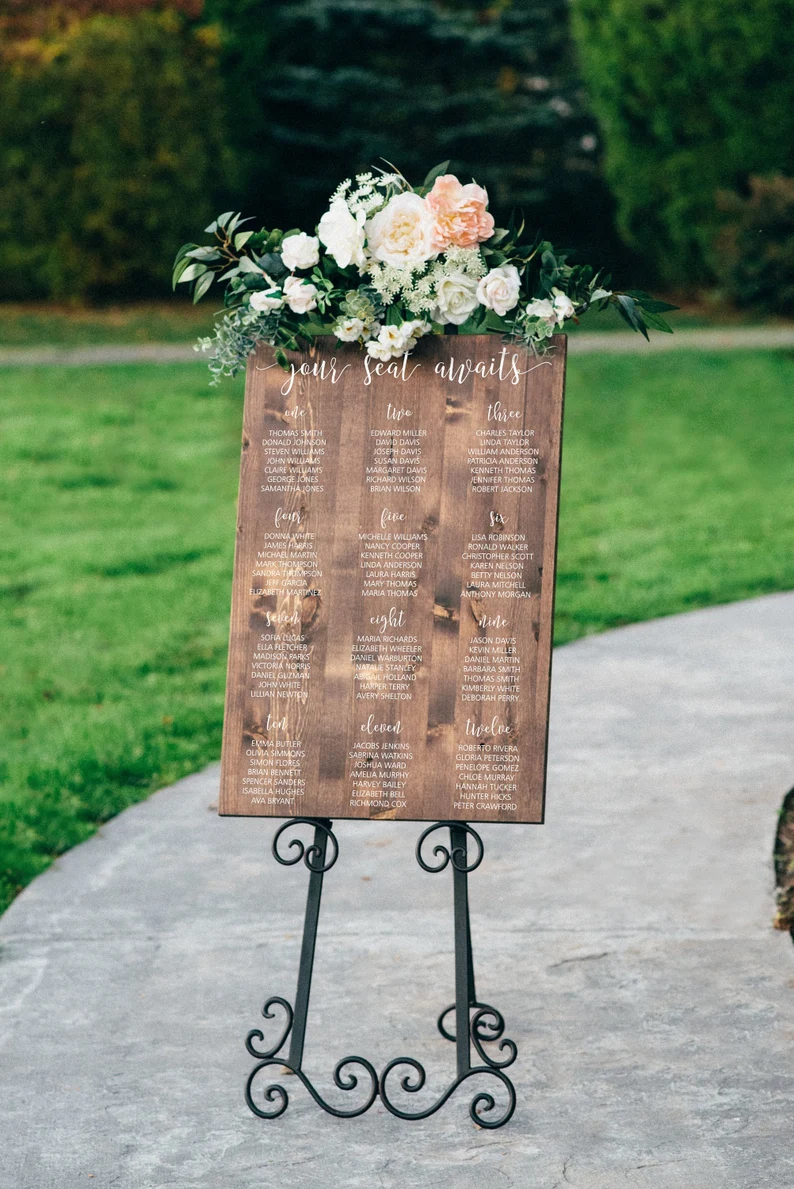
A wood seating chart is a classic for a reason.
Choose a large wooden sign and add painted, engraved, or vinyl lettering. Add greenery or flowers around it for a little extra personality.
It works especially well for rustic, outdoor, barn, and woodland weddings.
6. Framed Seating Chart
Sometimes simple really is best.
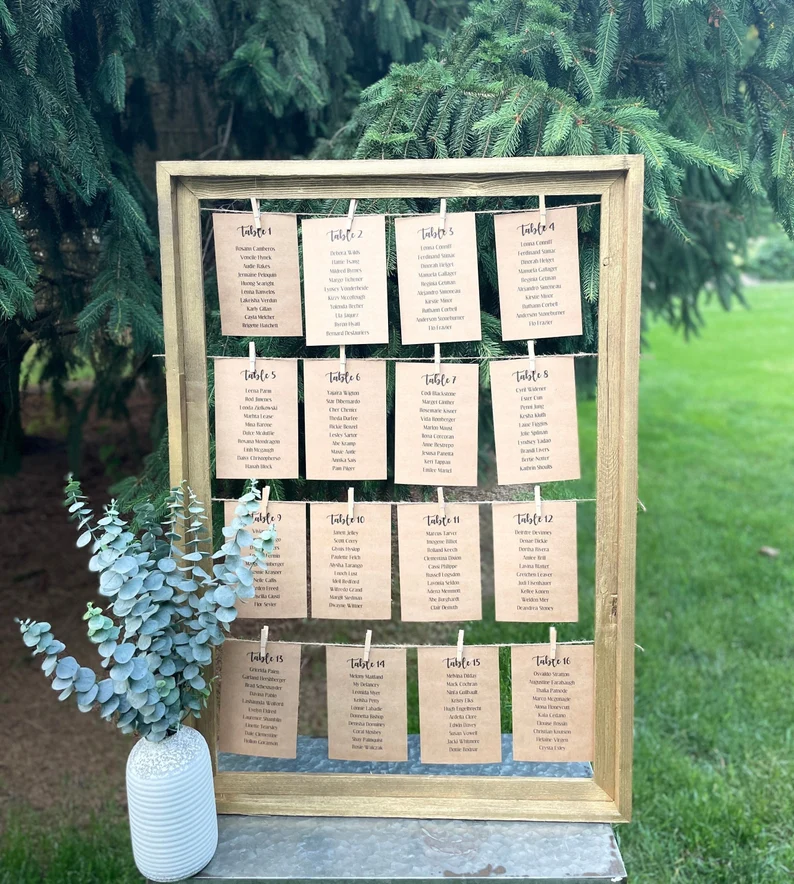
Print your seating chart cards and hang them inside a beautiful frame. That’s it.
A gold frame can make it feel elegant, while a wood frame works beautifully for a rustic wedding. A simple black frame is perfect for a modern reception.
7. Printable Wedding Seating Chart
Want a beautiful seating chart without spending a fortune?
A printable is your friend.
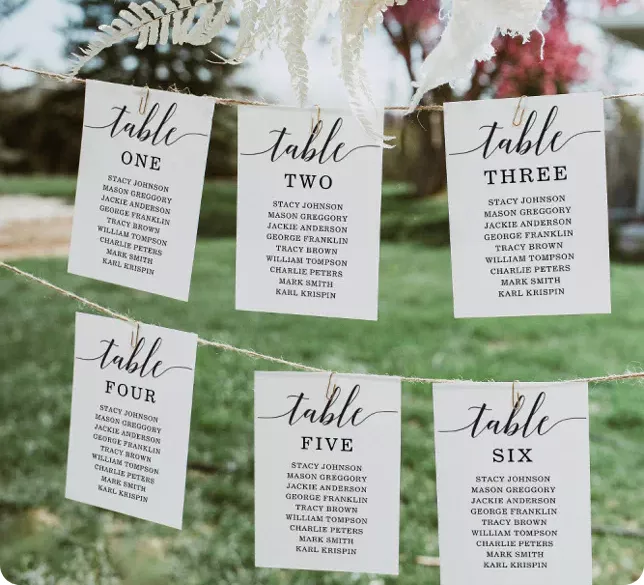
You can create or purchase a printable design, customize the names and table numbers, and print it yourself or through a local print shop.
This is also a smart option if you expect last-minute RSVP changes because you can simply update the file and print a new copy.
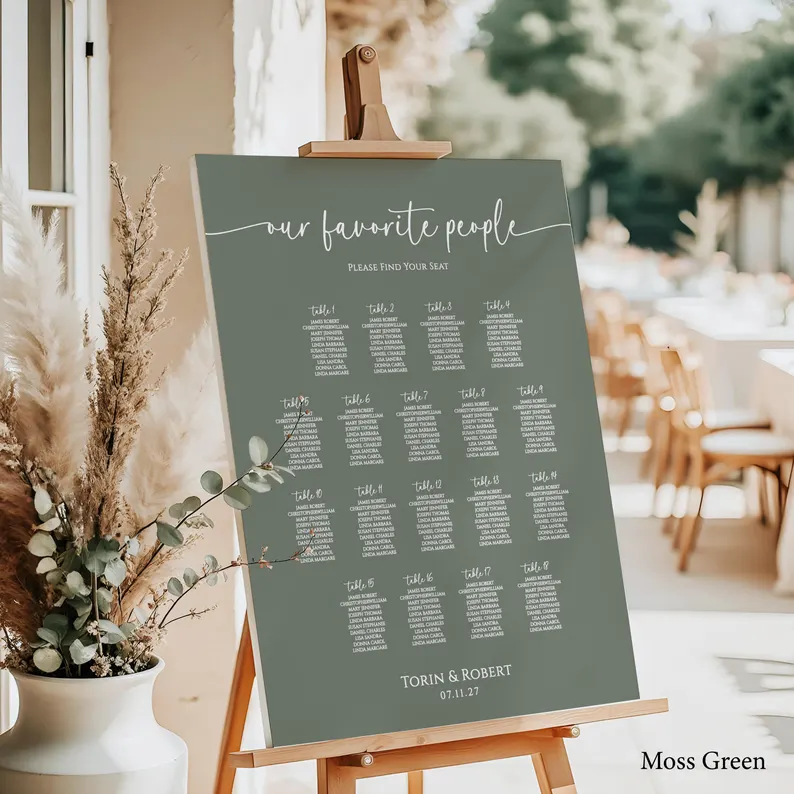
8. Simple Printed Sign
A well-designed paper seating chart on an easel can look every bit as polished as a much more expensive display.
Choose good typography, use plenty of white space, and make sure the names are large enough to read.
Sometimes the best wedding decor is the thing that simply does its job really well.
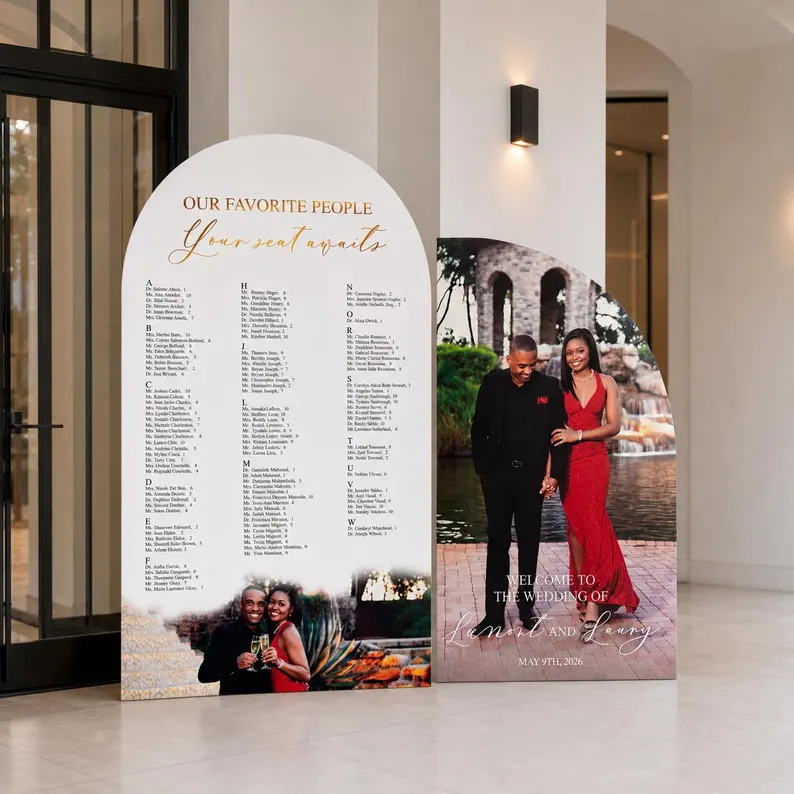
9. Seating Chart with Photos
Want to make your seating chart more personal?
Add photographs.
This beautiful display piece showcases meaningful photos to greet your guests.
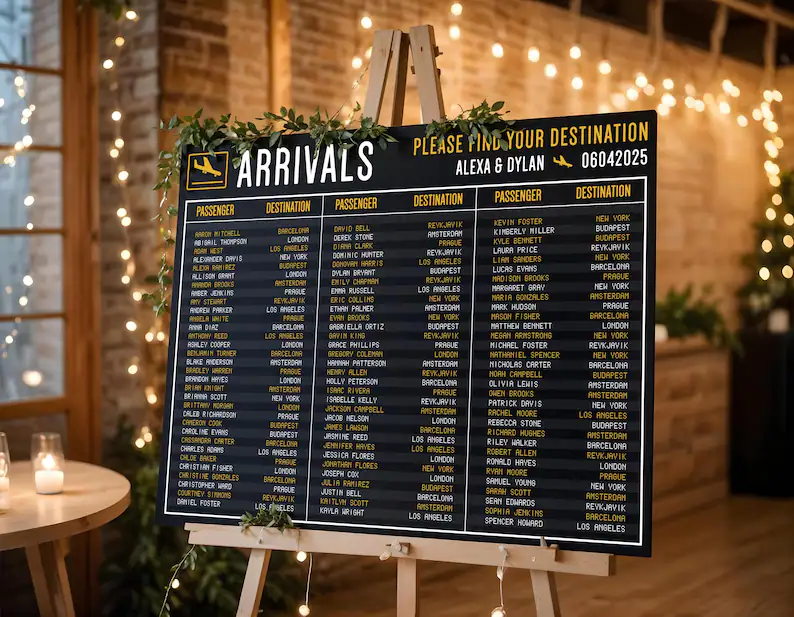
10. Destination-Inspired Seating Chart
Having a destination wedding? Let your seating chart join in on the fun.
Use postcards, maps, luggage tags, destination illustrations, or other travel-inspired details (like favorite places you’ve traveled together.
It’s a fun way to bring your wedding location into the reception decor.
How Should You Organize Your Wedding Seating Chart?
You have two main options: alphabetically by guest name or by table.
Alphabetical Seating Chart
An alphabetical seating chart might say:
Andrew — Table 4
Emma — Table 4
Holly — Table 8
Jeff — Table 10
Kelly — Table 10
Mike — Table 8
This is usually the fastest format for larger weddings because guests only need to find their own name.
Table-by-Table Seating Chart
Prefer a more decorative look? Group guests by table instead.
For example:
TABLE 4
Emma
Andrew
Holly
Mike
TABLE 8
Kelly
Jeff
Michelle
Ryan
This can look more decorative and gives guests a preview of who they’ll be sitting with.
For a large wedding, I’d lean toward alphabetical. For a smaller wedding, either can work.
Tip: If you’re expecting a lot of guests, alphabetical organization is usually the quickest format for people to navigate.
How Many Guests Should Sit at Each Wedding Table?
How many people you can seat at a wedding table depends on its size and shape, as well as your venue’s layout.
Round tables commonly seat around 8 to 10 guests, while larger banquet-style or rectangular tables can accommodate different numbers depending on their length. Your venue or caterer should be able to tell you the comfortable capacity for the tables you’re using.
And here’s an important tip: don’t feel like you have to fill every table to maximum capacity. If you can comfortably seat eight people at a table that technically fits ten, those extra two seats may give everyone a little more elbow room.
How Do You Decide Who Sits Together?
Start with the groups that are easiest to figure out, then work from there.
- Immediate family
- Extended family
- Wedding party
- Close friends
- College or school friends
- Work friends
- Couples and their dates
- Guests who already know one another
Then look for natural combinations. A table doesn’t have to consist of one perfectly defined friend group. You can mix people who have something in common and are likely to enjoy meeting one another.
For guests who don’t know many other people at the wedding, try placing them with friendly, outgoing guests rather than leaving them at a table where everyone else already knows each other.
Where Should Children Sit at the Wedding?
There’s no universal rule for where children should sit. It depends on their ages, your reception style, and what works best for their parents.
Young children will usually be most comfortable sitting with their parents. Older children may enjoy sitting with cousins or other kids they know.
If you’re having a kids’ table, consider the ages carefully. A table full of toddlers is going to need a different setup than a table of teenagers. And don’t forget to check whether your venue provides high chairs or booster seats if you’ll need them.
How to Make a Wedding Seating Chart
Once you’ve picked your display, you still have to figure out the actual seating assignments.
Here’s the easiest way to tackle it without losing your mind.
1. Start With Your Final Guest List
Don’t finalize your seating chart while your guest list is still changing every five minutes.
Wait until you’ve received most or all of your RSVPs and have a realistic idea of who’s actually coming.
2. Get Your Reception Floor Plan
Ask your venue for the reception floor plan and find out how many tables will fit comfortably.
Remember that your tables aren’t the only things taking up space. You’ll also need room for the dance floor, DJ or band, bar, buffet, cake table, sweetheart table, guest book, and other reception necessities.
3. Figure Out Your Table Sizes
Find out how many people can comfortably sit at each table.
Round tables, long banquet tables, rectangular tables, and other configurations all work differently.
And don’t feel like you have to cram every last chair around a table just because the venue says it technically fits. Your guests would probably prefer a little breathing room.
4. Make Your Guest Groups
Start grouping guests who naturally make sense together.
Think:
- Immediate family
- Extended family
- Wedding party
- College friends
- Work friends
- Couples
- Mutual friends
Then start combining groups where it makes sense.
5. Consider Family Dynamics
This is where seating charts get a little more complicated.
Think about relationships, divorced parents, family members who don’t get along, guests who don’t know anyone else, and anyone who may be uncomfortable sitting in a particular group.
You don’t need to make everyone ecstatic about their table. You just want everyone to have a comfortable place to sit.
6. Account for Special Seating Needs
Consider guests who may need easier access to certain areas of the reception.
This can include guests with mobility concerns, wheelchair users, older guests, young children, guests who need high chairs, or anyone who would benefit from being closer to a restroom or exit.
Talk to your venue about accessibility before finalizing your floor plan.
7. Place Your Head Table or Sweetheart Table
Decide where you’ll sit before you finish the rest of the seating chart.
Then work outward from there.
If you’re having a head table with your wedding party, consider where their dates will sit. If you’re having a sweetheart table, you may want your closest family and wedding party tables nearby.
8. Use a Seating Chart Maker
You can absolutely use paper and sticky notes, but a digital seating chart maker can make rearranging guests much easier.
Our wedding seating chart maker guide can help you choose a tool that works for your reception layout.
9. Double-Check Everything
Before you send your seating chart to print, check every single name.
Then check it again.
Make sure every guest is included, nobody is listed twice, table numbers are correct, couples are seated correctly, and your seating chart matches the actual floor plan.
This is one of those wedding tasks where a second pair of eyes is worth its weight in cake.
Where Do You Put a Wedding Seating Chart?
If possible, place the seating chart before guests enter the main reception area. That way, they can find their assignment before they’re standing in the middle of the room trying to figure out where to go.
If you’re having cocktail hour, the transition from cocktail hour into the reception can be an ideal location.
The best location is somewhere guests will naturally pass before they sit down for dinner.
Good options include:
- Near the reception entrance
- At the entrance to the ballroom
- Along the path from cocktail hour to the reception
- Near the guest book
- Near the reception doors
One thing to avoid: putting your seating chart somewhere that creates a giant traffic jam.
If 150 people all need to stop in the same tiny hallway to find their names, things are going to get crowded quickly.
When Should You Make Your Wedding Seating Chart?
You can start working on your seating arrangement before your RSVPs are completely final, but don’t order the final seating chart too early.
A good approach is to:
- Before RSVPs: Think about your table layout and begin grouping guests.
- After RSVPs: Finalize who is actually attending.
- After the final guest count: Finish your table assignments.
- Before printing: Proofread every name and table number.
If your seating chart is easy to edit, you have a little more flexibility. If you’ve ordered a custom acrylic or mirror sign with permanent lettering, wait until your guest list is as final as possible.
Seating Chart vs. Escort Cards vs. Place Cards
Wedding stationery terminology can get confusing fast, so here’s the simple version:
Seating chart: One display tells guests which table they’re assigned to.
Escort card: An individual card tells a guest which table they’re assigned to.
Place card: An individual card tells a guest exactly which seat to take.
You can use just one of these or combine them.
For example, you might use a seating chart to assign guests to tables and place cards to assign specific seats.
Or you might skip the seating chart and use escort cards instead.
There’s no single “correct” way to do it.
Do You Need Place Cards If You Have a Seating Chart?
Usually, no.
If your seating chart assigns guests to tables but doesn’t assign individual seats, guests can simply choose a seat once they reach their table.
You only need place cards if you want to assign specific seats.
There are reasons you might want to do that (e.g. a very formal dinner, a complicated meal service, or a carefully arranged table), but it’s absolutely not required for every wedding.
Wedding Seating Chart Tips
A seating chart needs to be pretty, but pretty isn’t enough. Guests have to be able to use it quickly.
- Make names easy to read. Don’t use tiny lettering just to fit everything onto one sign.
- Make table numbers obvious. Guests should be able to spot them immediately.
- Organize the information clearly. Avoid a design that’s beautiful but confusing.
- Give guests room to gather. Don’t put the display in a narrow hallway.
- Proofread every name. Seriously. Twice.
- Keep a backup copy. Give your planner, coordinator, or trusted friend a copy of the final seating assignments.
- Don’t make the display too low. Guests should be able to read it comfortably while standing.
- Think about lighting. If the reception is dim, make sure guests can still read their assignments.
Can You Change a Wedding Seating Chart After It’s Printed?
Sometimes.
That’s why it’s smart to think about your guest list before choosing your display.
A printable sign can be updated and reprinted relatively easily. Individual cards can also be moved around.
A custom acrylic or mirror seating chart can be much harder to change once it’s finished.
If you know you’re likely to have last-minute changes, choose a format that gives you some flexibility.
Can a Wedding Seating Chart Save Money?
It can, depending on the design.
A single printed seating chart may cost less than creating an individual escort card for every guest. A simple printable or framed sign can be particularly budget-friendly.
On the other hand, a huge custom acrylic installation can cost significantly more than basic escort cards.
If you’re trying to save money, don’t assume that “seating chart” automatically means expensive. A beautiful printable, poster, thrifted frame, or DIY display can do the job just as well.
What Is the Best Wedding Seating Chart?
Honestly? The best wedding seating chart is the one your guests can understand in about ten seconds.
If you have 200 guests, an alphabetical list may be your best friend.
If you have a smaller reception, a table-by-table display can be perfectly easy to navigate.
If you’re having a formal wedding, an elegant acrylic or mirror display might fit beautifully.
If you’re on a budget, a printable sign can look just as lovely.
And if you’re having a backyard wedding, a DIY wood or window-pane seating chart may be exactly right.
Choose the format based on your guest list first, then make it beautiful.
Wedding Seating Chart Checklist
Before you send your seating chart to print, run through this quick checklist:
- ☐ Final guest list is complete
- ☐ RSVP changes have been added
- ☐ Table sizes and capacities are confirmed
- ☐ Venue floor plan is finalized
- ☐ Every guest has a table assignment
- ☐ Couples and families are seated appropriately
- ☐ Children and high chairs are accounted for
- ☐ Accessibility needs have been considered
- ☐ Table numbers match the floor plan
- ☐ Every guest’s name is spelled correctly
- ☐ Seating chart is easy to read
- ☐ Someone has a backup copy of the final seating assignments
Get Your Wedding Seating Chart Now
A wedding seating chart is one of those reception details that’s both practical and fun to personalize.
Start with the boring-but-important stuff: your guest list, table sizes, floor plan, and seating assignments. Once those pieces are figured out, you can choose a display that feels like you.
Whether that’s a giant floral seating chart, an elegant acrylic sign, a vintage window, a simple printable, or something you made yourself, your goal is the same: help your guests find their table without making them work for it.
And honestly, if you can make that part of the wedding beautiful too? That’s a win.
More Wedding Reception Planning
Planning the rest of your reception? Start here:
- Wedding Reception Essentials: Complete Checklist of Must-Have Details
- Wedding Card Box Ideas
- Escort Cards vs. Seating Charts
- Wedding Seating Chart Maker
Wedding Seating Chart FAQs
When should you make a wedding seating chart?
Start planning your seating arrangement once you know your reception layout, then finalize it after your RSVP deadline and final guest count are known.
Do all weddings need a seating chart?
No. Small or casual weddings can work perfectly well with open seating. A seating chart is more useful when you have a larger guest list or want to assign guests to specific tables.
Should a wedding seating chart be alphabetical?
It doesn’t have to be, but alphabetical seating charts are often easiest for larger weddings because guests can find their names quickly and see their table number.
Does a seating chart assign specific seats?
Usually not. A seating chart generally assigns guests to a table. Place cards are used when you want guests to have specific seats.
Where should a seating chart be displayed?
Place it somewhere guests will see it before they enter the reception seating area, such as near the entrance or along the path from cocktail hour to dinner.
Can you have a seating chart without place cards?
Absolutely. If your seating chart assigns guests to tables rather than individual seats, place cards aren’t necessary.
What is the easiest way to make a wedding seating chart?
A seating chart maker or spreadsheet can make the planning process much easier, especially when you need to move guests between tables. Once your assignments are final, you can transfer them to whatever display you’ve chosen.