
In this guide: The 15 best engagement rings that are not diamonds — including sapphire, pearl, garnet, tanzanite, moissanite, and more. Compare styles, find options for every ring style, and shop editor-approved picks. Be sure to subscribe for the latest.
If you’re wanting engagement rings that are not diamonds, you’ve come to the right place. Yes, an engagement ring can absolutely have a gemstone other than a diamond. Some of the best engagement rings that aren’t diamonds feature sapphire, moissanite, emerald, ruby, morganite, opal and aquamarine. Sapphire and moissanite are especially popular choices for everyday wear, while softer stones can be beautiful options when you’re willing to give them a little extra care.
Who says your engagement ring has to be a diamond? If diamonds have never really been your thing, you’re definitely not out of options. Maybe you want a pop of color, something completely unexpected, or simply a gemstone you’ve always loved.
And honestly, I love that. Your engagement ring should feel personal to you, not like you’re checking a box on a list of things you’re “supposed” to have.
So, let’s look at some of the top engagement rings that aren’t diamonds, from classic blue sapphires and seriously sparkly moissanite to romantic morganite, rich emeralds and gorgeous stones you may not have considered yet.
Good to know: Yes, your engagement ring can absolutely have a gemstone other than a diamond. Sapphire, moissanite, emerald, ruby, morganite, opal and aquamarine are popular alternatives, with sapphire and moissanite being especially well suited to everyday wear.
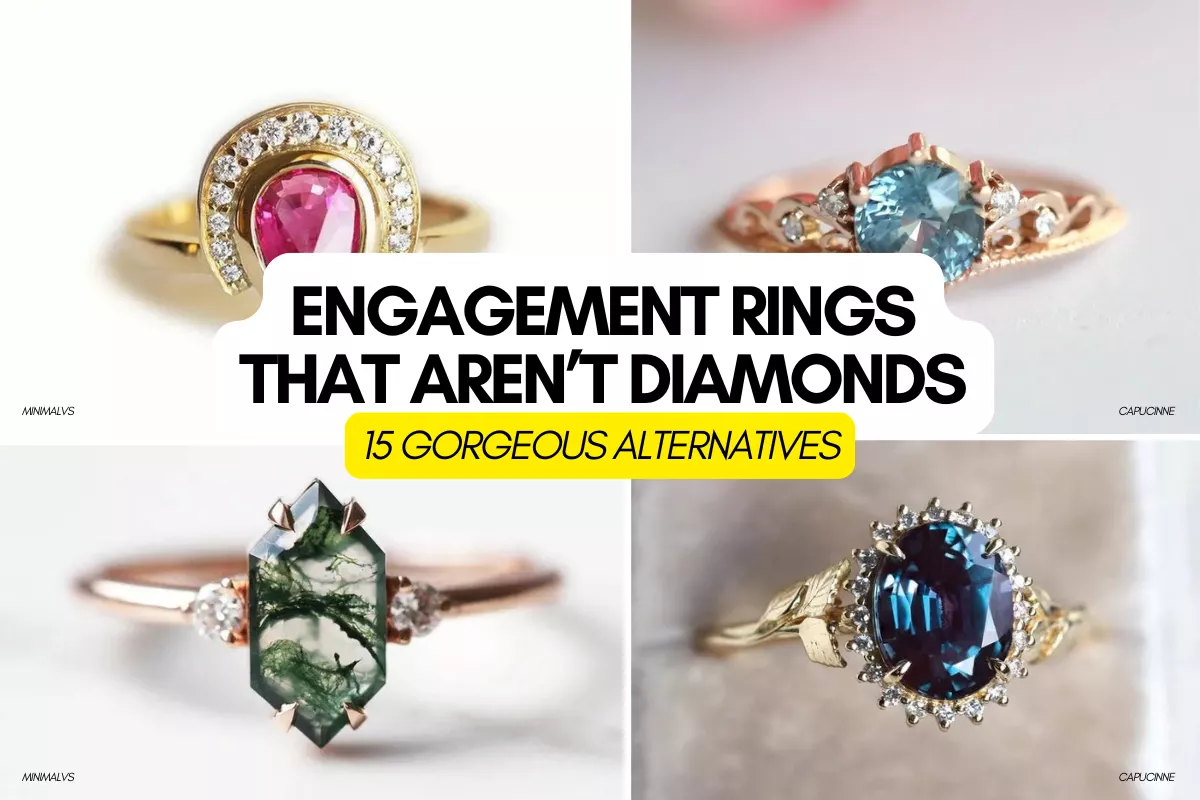
The Best Engagement Ring Stones That Aren’t Diamonds
Not sure where to start? These are some of the most beautiful alternatives to consider.
| Stone | Look | Best For |
|---|---|---|
| Sapphire | Classic, colorful and elegant | Everyday wear + timeless style |
| Moissanite | Bright, diamond-like sparkle | Maximum sparkle without a diamond |
| Emerald | Rich green and sophisticated | Vintage-inspired or colorful rings |
| Ruby | Bold, romantic red | A dramatic, meaningful ring |
| Morganite | Soft blush pink and romantic | Feminine, romantic ring styles |
| Opal | Dreamy, iridescent and one-of-a-kind | Unique, artistic rings |
| Aquamarine | Soft blue and serene | Something delicate and unexpected |
| Pink Sapphire | Pretty pink with a classic feel | Color without going too unconventional |
| Green Tourmaline | Natural green with earthy tones | Nature-loving couples |
| Amethyst | Rich purple and distinctive | A colorful, budget-friendly option |
| Garnet | Deep red and moody | Romantic, vintage-inspired styles |
| Pearl | Soft, luminous and classic | Nontraditional vintage-inspired rings |
| Tanzanite | Blue-purple and striking | A rare, unexpected center stone |
| Alexandrite | Color-changing and mesmerizing | Rare, magical and truly unusual rings |
| Mixed Gemstones | Colorful and completely unique | A one-of-a-kind engagement ring |
Which Non-Diamond Engagement Stone Should You Choose?
It really comes down to what you want your ring to do. If you want something durable for everyday wear, start with sapphire, ruby or moissanite. If color is your top priority, emerald, sapphire, ruby and morganite are beautiful places to start. And if you want your ring to feel completely unexpected, look at opal, alexandrite, tourmaline or a mixed-gemstone design.
- Best for everyday wear: Sapphire or moissanite
- Best for color: Sapphire, emerald or ruby
- Best for sparkle: Moissanite
- Best for something romantic: Morganite
- Best for something unusual: Alexandrite or opal
- Best for a vintage feel: Garnet, emerald or pearl
- Best for something completely personal: A birthstone or mixed-gemstone ring
15 Engagement Rings That Aren’t Diamonds
Ready to ditch the traditional diamond? These gemstone engagement ring ideas prove you can have something gorgeous, meaningful and seriously sparkly without choosing a diamond.
1. Blue Sapphire Engagement Ring
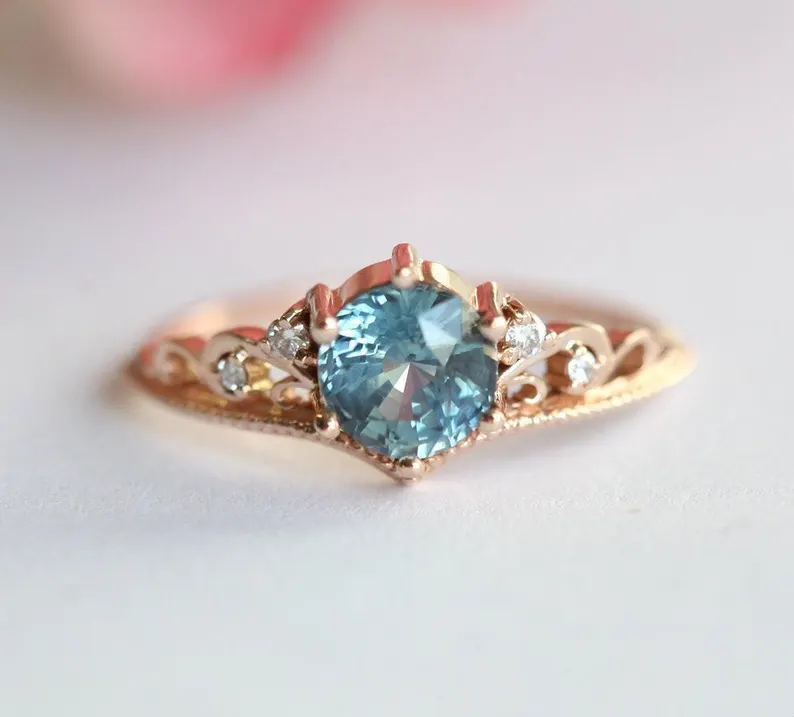
Blue sapphire is one of the best alternatives to a diamond if you want your engagement ring to feel traditional but still have plenty of personality. That gorgeous blue center stone is instantly recognizable and looks especially beautiful in white gold, yellow gold and platinum settings.
Sapphire is also a durable choice for an engagement ring, making it one of the options I’d look at first if you plan to wear your ring every day.
Best for: Classic brides who want color.
2. Moissanite Engagement Ring
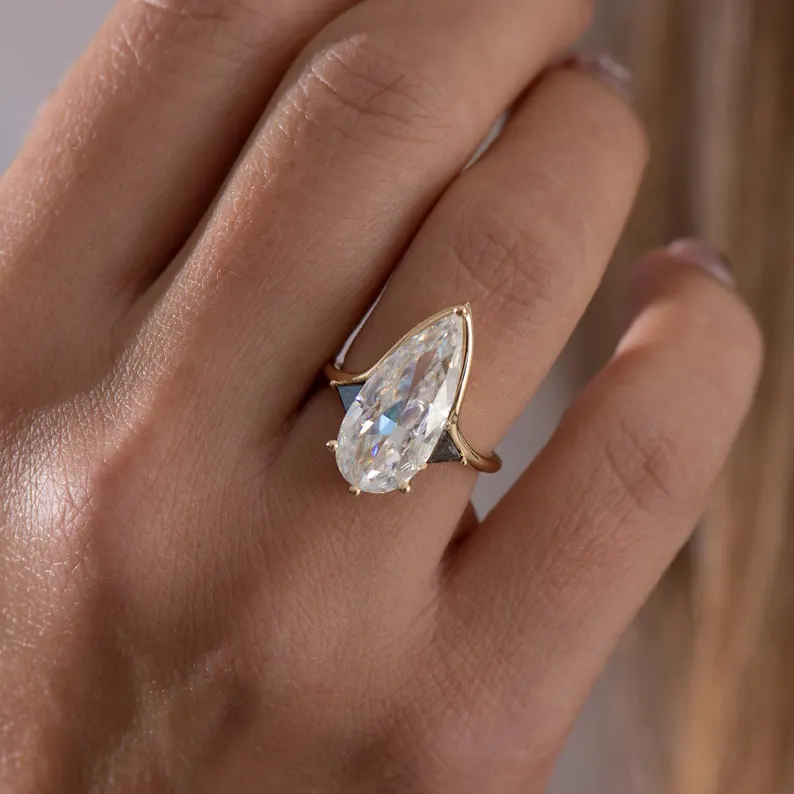
If your favorite part of a diamond is the sparkle, take a look at moissanite. It has a brilliant, glamorous appearance and can give you that traditional engagement-ring look without using a diamond.
Moissanite is especially fun if you want a larger center stone or a ring that catches the light from across the room.
Best for: Maximum sparkle.
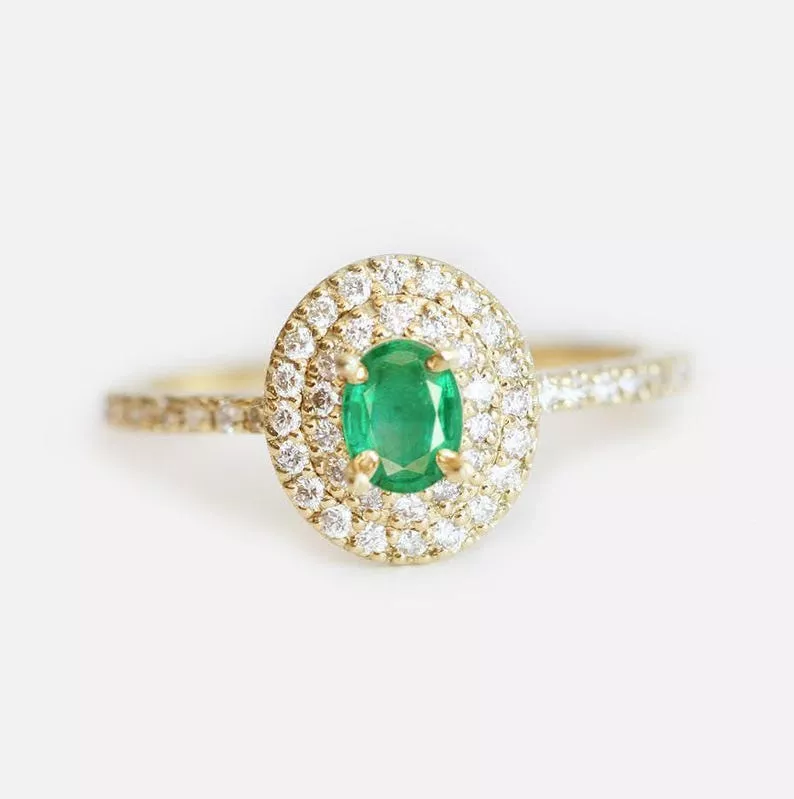
3. Emerald Engagement Ring
An emerald engagement ring is basically jewelry’s answer to old-Hollywood glamour. The rich green color feels sophisticated, romantic and a little bit unexpected.
Emeralds can be especially beautiful in vintage-inspired settings, halo designs and simple solitaire rings where the gemstone gets to do all the talking.
Best for: Vintage lovers and green-gemstone fans.
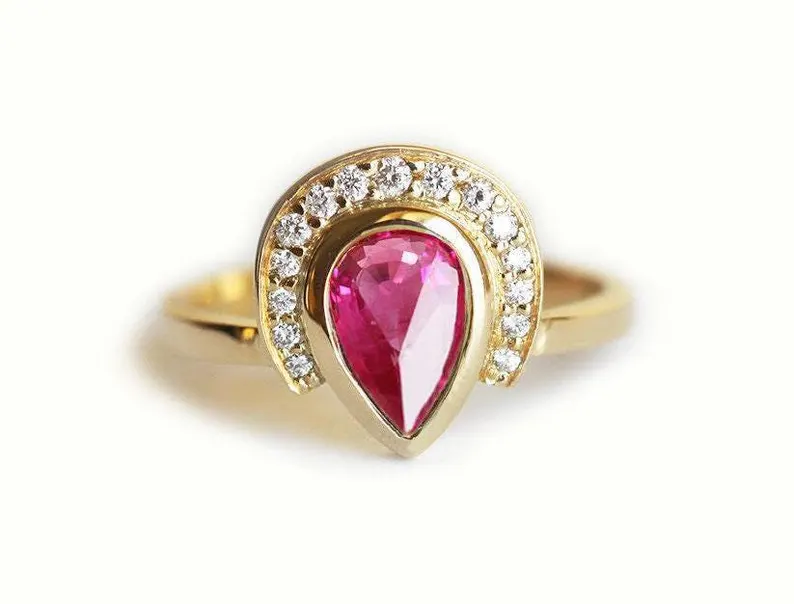
4. Ruby Engagement Ring
A ruby engagement ring is bold, romantic and impossible to ignore. The deep red color gives an engagement ring an entirely different personality from the traditional diamond solitaire.
If your dream ring is more red velvet than white satin, this might be the one.
Best for: Romantic maximalists.
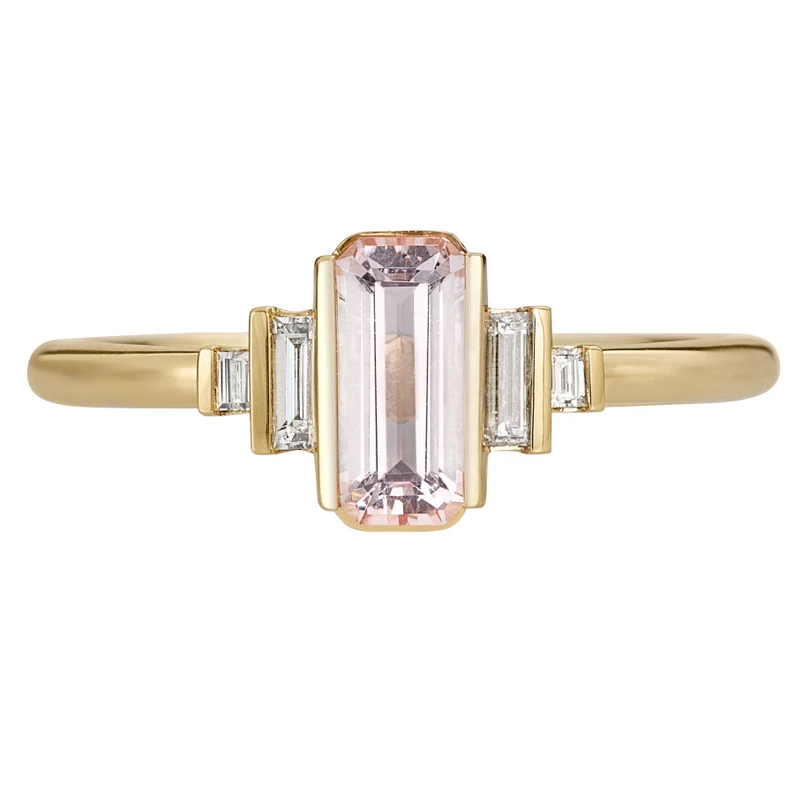
5. Morganite Engagement Ring
For a softer look, consider morganite. Its pretty pink-to-peach color gives an engagement ring an effortlessly romantic feel, especially when paired with rose gold.
Morganite is a lovely option if you want something feminine and delicate without choosing a traditional diamond center stone.
Best for: Romantic, blush-toned rings.
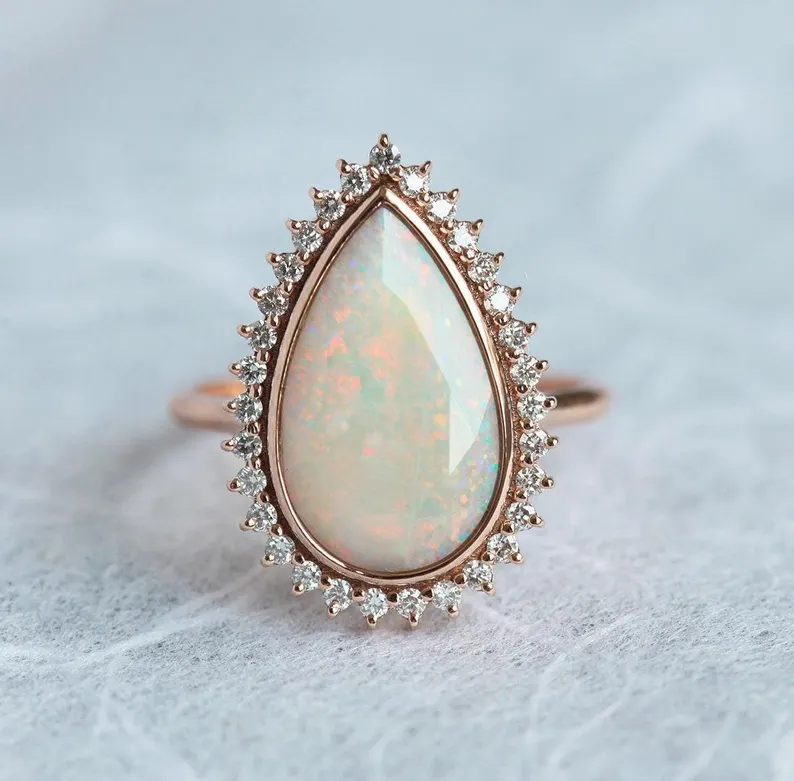
6. Opal Engagement Ring
Want your engagement ring to be completely different? An opal might be calling your name.
Opals have an incredible play-of-color that can shift as the stone catches the light, so no two rings have quite the same personality. They’re especially gorgeous for boho, vintage and nature-inspired styles.
Best for: The bride who wants something nobody else has.
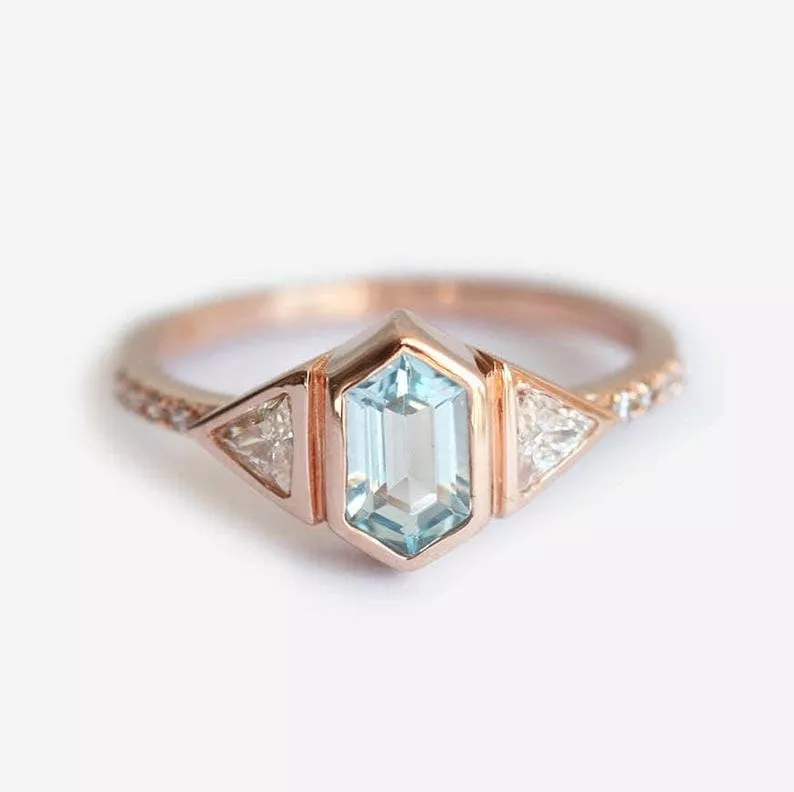
7. Aquamarine Engagement Ring
Aquamarine gives you a beautiful pale-blue center stone that feels fresh, airy and romantic. It’s also an especially sweet choice if you like the idea of incorporating something blue into your engagement ring.
Pair it with a simple setting for a clean modern look or a vintage setting for something more whimsical.
Best for: Something-blue lovers.
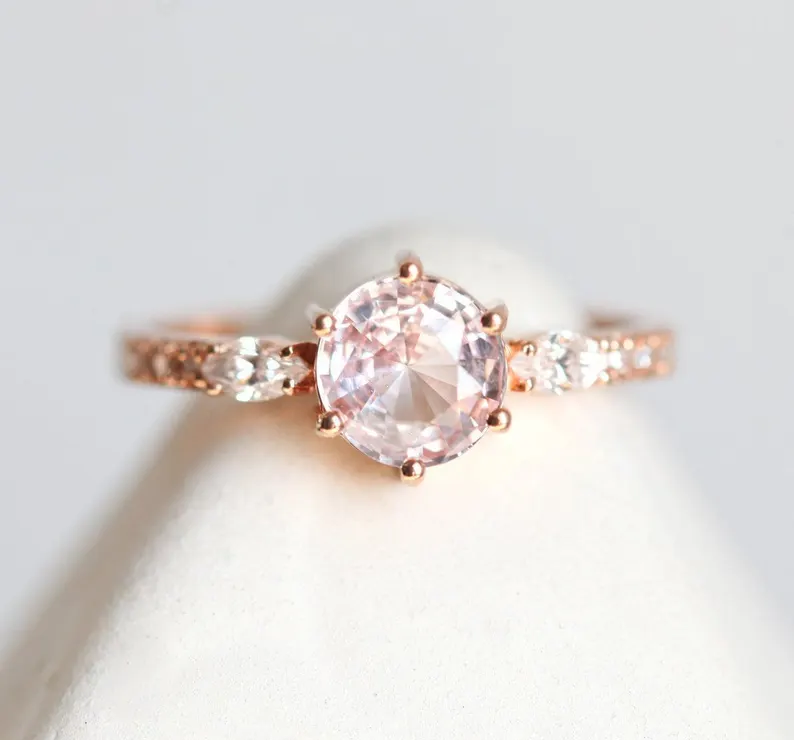
8. Pink Sapphire Engagement Ring
Who says sapphire has to be blue? Pink sapphire gives you the durability of sapphire with a much softer, sweeter color.
It’s a great middle ground if you want a colored gemstone but aren’t ready to go as bold as ruby or emerald.
Best for: Pink lovers who want a durable gemstone.
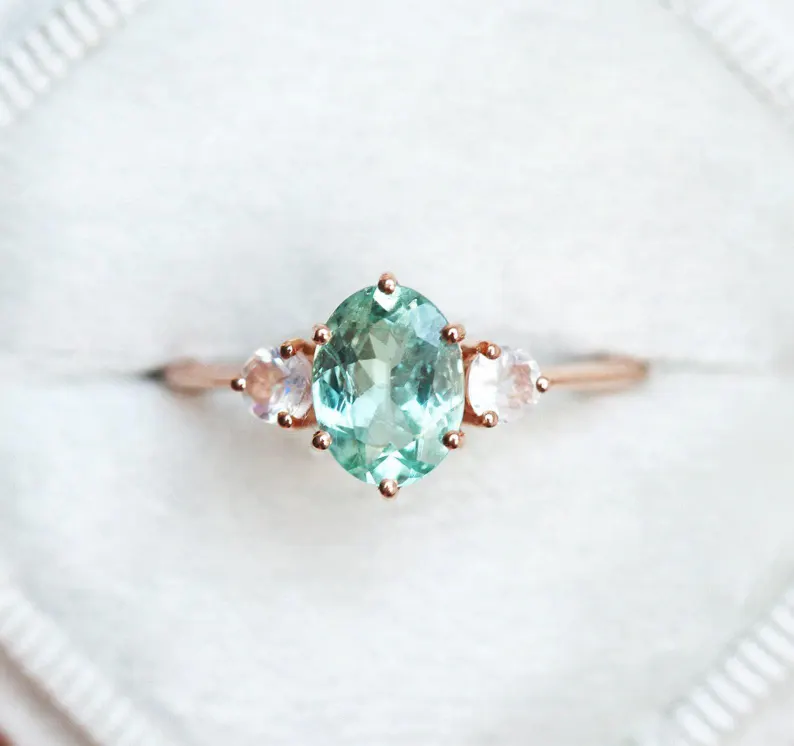
9. Green Tourmaline Engagement Ring
Tourmaline comes in an almost ridiculous range of colors, which makes it a fantastic choice if you’re looking for something outside the usual engagement-ring lineup.
A gorgeous green tourmaline can give you the jewel-toned look of an emerald while still feeling distinctive and unexpected.
Best for: Someone who wants a gemstone people will ask about.
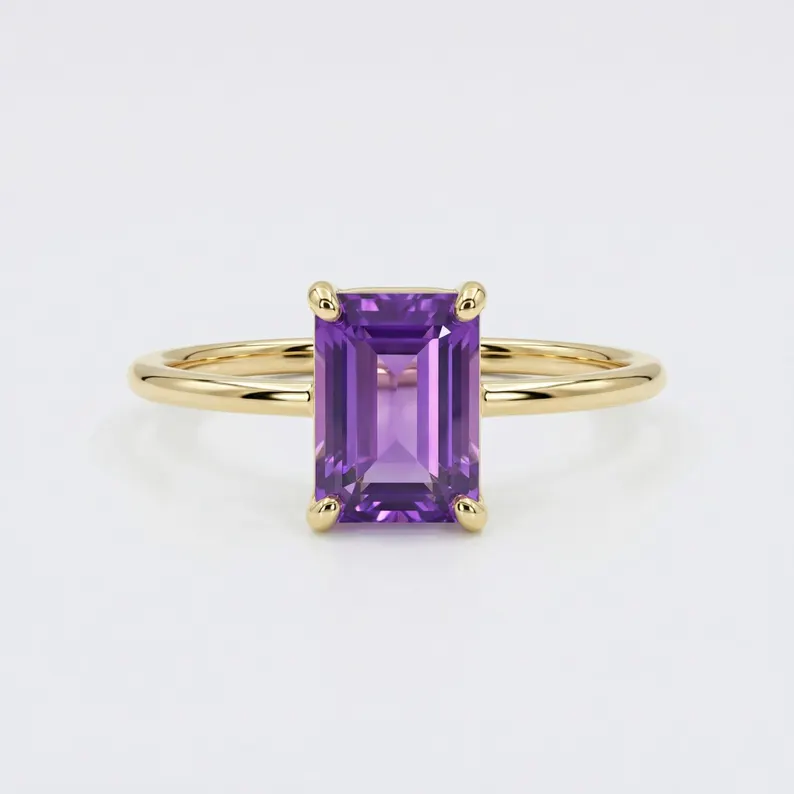
10. Amethyst Engagement Ring
Purple engagement rings? Yes, please.
Amethyst is a beautiful choice if purple is your color or you simply want a ring that looks nothing like the standard solitaire. Its rich violet shade can look especially striking with yellow-gold settings.
Best for: Purple lovers and colorful ring collectors.
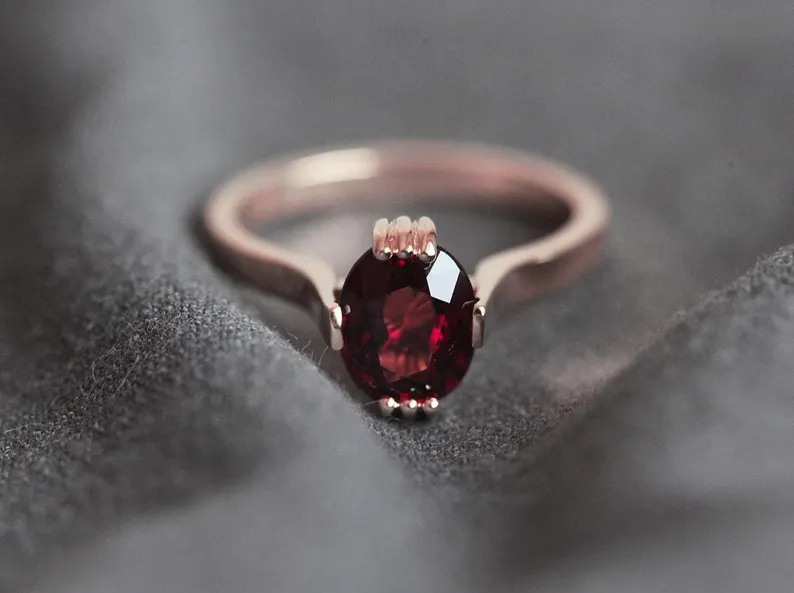
11. Garnet Engagement Ring
Garnet is another gorgeous option for anyone who loves a deep, dramatic gemstone. While red garnet is the classic look, garnets can come in other colors, too.
A deep red garnet paired with an antique-inspired setting can give you a seriously romantic vintage feel.
Best for: Vintage-inspired romantics.
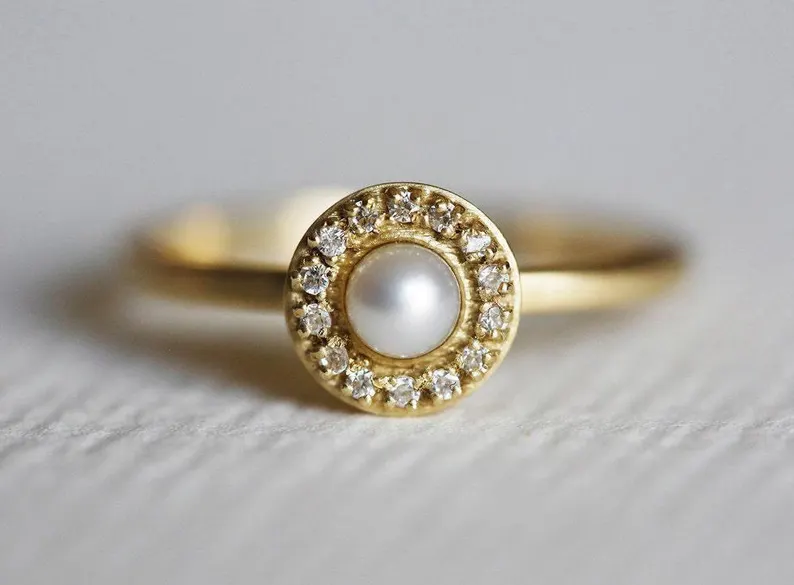
12. Pearl Engagement Ring
A pearl engagement ring is about as far from a traditional diamond solitaire as you can get, and that’s exactly why it can be so beautiful.
Its soft, luminous appearance feels feminine and timeless, although pearls require more care than many harder gemstones and may not be the best choice for someone who wants a completely carefree everyday ring.
Best for: Nontraditional brides who love soft, classic jewelry.
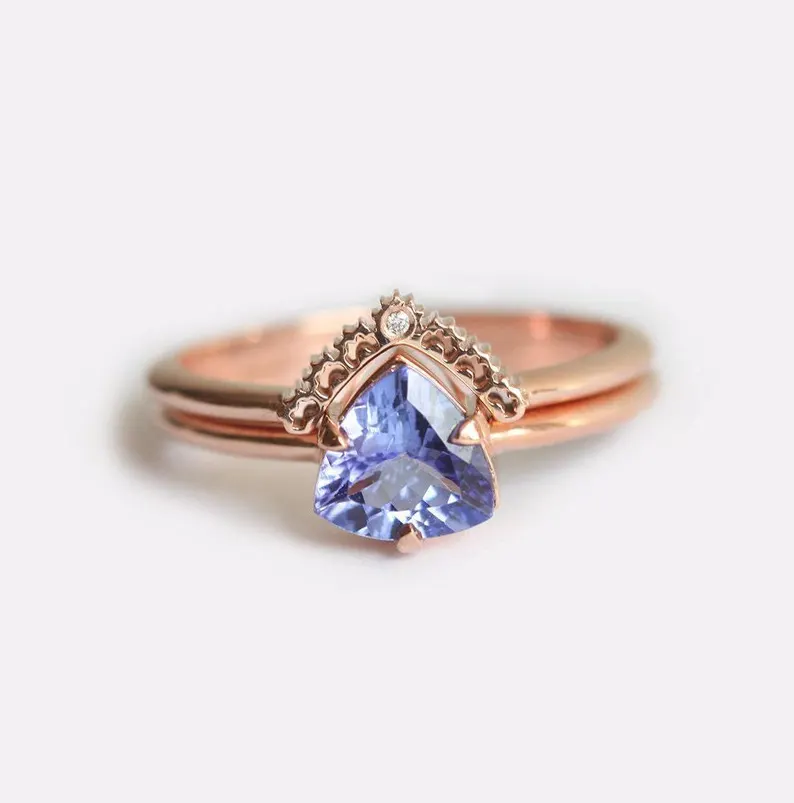
13. Tanzanite Engagement Ring
Tanzanite has a gorgeous blue-violet color that can look completely different depending on the lighting. If you want a blue gemstone but you’re looking for something less expected than sapphire, it’s worth a look.
Best for: Someone who wants a rare-looking, colorful center stone.
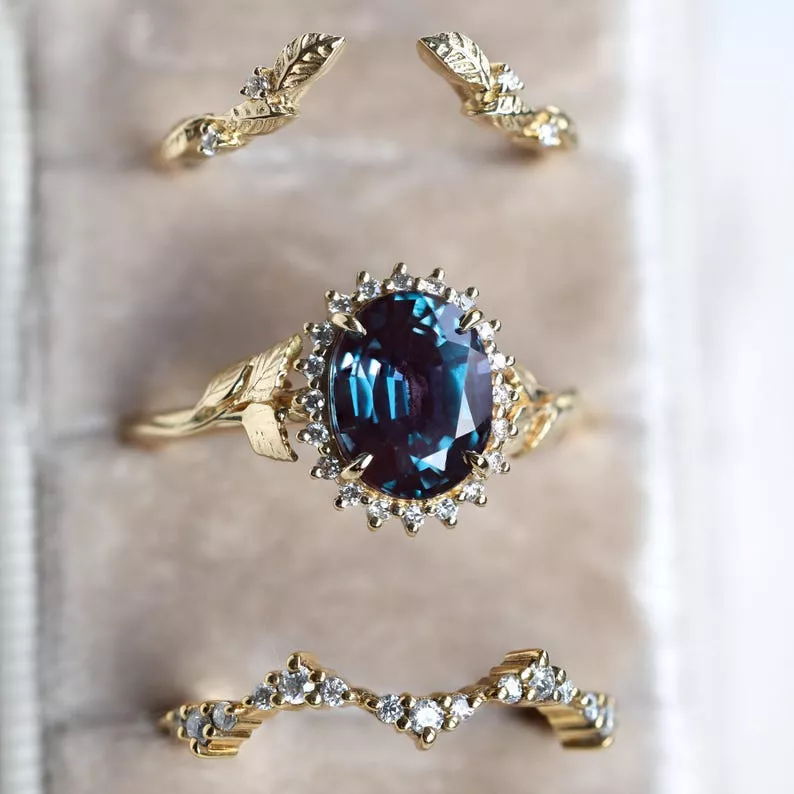
14. Alexandrite Engagement Ring
Alexandrite is one of those gemstones that makes you look twice. Known for its beautiful color-changing effect, alexandrite can appear greenish in daylight and shift toward reddish or purplish tones under different lighting. How cool is that for an engagement ring?
It’s a gorgeous choice if you want something rare, unexpected and completely different from a traditional diamond ring. An alexandrite engagement ring can feel especially personal because the stone’s color can change depending on the light, giving it a little bit of everyday magic.
If you’re searching for an engagement ring that isn’t a diamond but still feels incredibly special, this is definitely one to consider.
Best for: Rare, one-of-a-kind engagement rings.
15. A One-of-a-Kind Mixed-Gemstone Ring
You don’t even have to choose one traditional gemstone. Look for an engagement ring that combines multiple colored stones, features an unusual cut or uses a vintage or handmade setting.
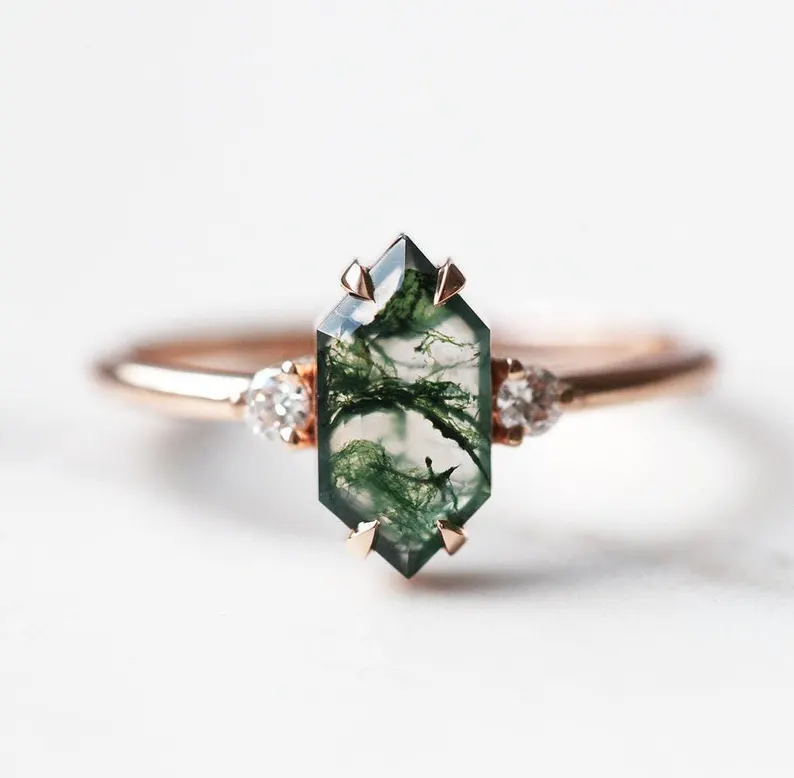
This is where you can really make the ring feel personal. Think different colored side stones, a moss agate engagement ring, a cluster of tiny gemstones, a vintage ring with character or a completely unexpected center stone.
Best for: Anyone who wants a ring that doesn’t look like everyone else’s.
What is the best stone for an engagement ring besides a diamond?
Sapphire is one of the best overall choices for an engagement ring besides a diamond. It’s beautiful, durable enough for everyday wear and available in a wide range of colors, although blue sapphire is the classic choice.
Moissanite is another excellent option if what you really want is a bright, sparkly engagement ring with a diamond-like appearance. If color is your priority, emerald, ruby, morganite, aquamarine and other gemstones give you much more room to personalize your ring.
Ultimately, the “best” stone depends on what matters most to you: durability, color, sparkle, price, rarity or simply how much you love looking at it.
What is the most durable non-diamond engagement stone?
If everyday durability is your biggest concern, sapphire and ruby are excellent gemstone choices. Both are varieties of corundum and rank very high on the Mohs hardness scale.
Moissanite is also exceptionally hard and is a popular choice for everyday engagement rings.
Other gemstones, including emerald and opal, can be more susceptible to scratching or damage, so you’ll want to consider your lifestyle before choosing one for a ring you’ll wear constantly.
What is the best diamond alternative?
Moissanite is one of the best-known diamond alternatives if you want a stone with a bright, sparkly appearance. Sapphire is another excellent choice if you want something more colorful and traditional-looking.
But here’s the thing: you don’t have to find a gemstone that looks like a diamond.
If you love emerald green, choose emerald. If you have always loved sapphires, choose sapphire. If an opal makes your heart do a little flip, that’s your ring.
Are non-diamond engagement rings cheaper?
They can be, but not always.
The price of a non-diamond engagement ring depends on the gemstone, its size, quality, color, origin and the setting itself. Some gemstones can cost considerably less than a comparable diamond, while rare or exceptionally high-quality gemstones can be very valuable.
That’s one reason I wouldn’t choose your gemstone based on price alone. Start with the color and style you love, then find a ring that fits your budget.
Can you use a birthstone as an engagement ring?
Of course. Using a birthstone is one of the sweetest ways to make a non-diamond engagement ring feel personal.
You could choose your own birthstone, your partner’s, a stone associated with the month you met or married, or simply a gemstone you both love. There are no engagement-ring rules saying you have to follow the traditional diamond formula.
How to Choose an Engagement Ring That Isn’t a Diamond
Before falling head-over-heels for a gorgeous gemstone ring, think about these five things:
Think about how often you’ll wear it
If you plan to wear your engagement ring 24/7, prioritize a gemstone that can handle your everyday routine. Someone who works with their hands may want a different stone than someone who removes their rings before every activity.
Decide whether color or sparkle matters more
Want that eye-catching flash of light? Look at moissanite. Want a ring with a strong, unmistakable color? Start with sapphire, ruby, emerald, morganite or another colored gemstone.
Consider the setting
The setting can completely change the personality of the same gemstone. A sapphire solitaire can feel classic and elegant, while the same sapphire in an antique-inspired setting can feel romantic and vintage.
Don’t forget the metal
Yellow gold, white gold, rose gold and platinum can all make the same gemstone look completely different. Warm-toned stones can look gorgeous with yellow or rose gold, while white metals can create a crisp, modern contrast.
Are All Gemstones Good for Everyday Engagement Rings?
Not necessarily. An engagement ring gets plenty of daily wear, so the gemstone’s durability is worth considering before you fall in love with a particular color or cut.
Sapphire, ruby and moissanite are especially well suited to everyday wear. Other gemstones, such as opal and pearl, are more delicate and may need extra care. That doesn’t mean you can’t choose them. It just means you’ll want to be a little more mindful about how and when you wear the ring.
Choose the ring you actually love
This is the most important one.
You don’t need to choose the gemstone that is currently trending. You don’t need to choose the one everyone else has. And you definitely don’t need to choose a diamond just because it’s traditional.
If you look at the ring and think, “Yep. That’s mine,” you found the right one.
FAQs about engagement rings that aren’t diamonds
What can I use instead of a diamond in an engagement ring?
You can use almost any gemstone you love, although some are better suited to everyday ring wear than others. Popular choices include sapphire, moissanite, ruby, emerald, morganite, opal and aquamarine.
Are sapphire engagement rings good for everyday wear?
Yes. Sapphire is a popular choice for everyday engagement rings because it is a durable gemstone and comes in many beautiful colors.
Can an engagement ring have a colored stone?
Absolutely. Colored gemstones are a beautiful way to make an engagement ring feel more personal. Blue sapphire, ruby, emerald, pink sapphire, morganite and aquamarine are just a few possibilities.
Is alexandrite a good choice for an engagement ring?
Alexandrite can be a beautiful choice if you want an engagement ring that feels rare and unusual. Its famous color-changing effect can make the gemstone appear different in different lighting, giving the ring a distinctive look. Because it is less common than stones such as sapphire or moissanite, it can be especially appealing if you want something that doesn’t look like everyone else’s ring.
Is moissanite a diamond?
No. Moissanite is a different gemstone with its own chemical composition and characteristics. It is popular in engagement rings because of its exceptional brilliance and diamond-like appearance.
What is the most popular non-diamond engagement ring stone?
Sapphire is one of the most popular non-diamond choices, particularly blue sapphire. Moissanite is also a very popular option for people who want a highly sparkly stone without choosing a diamond.
Can an engagement ring be unique without being expensive?
Absolutely. Choosing an unexpected gemstone, unusual setting or vintage-inspired design can make a ring feel completely unique without requiring an enormous budget.
Ready to skip the diamond?
Honestly, I love this idea.
Your engagement ring is supposed to represent your relationship, not a rule book. If a sapphire makes you happier than a diamond, get the sapphire. If you want emerald, get emerald. If you want something completely weird and wonderful that nobody else in your friend group has, even better.
There are so many beautiful engagement rings that aren’t diamonds. And finding the one that feels like you is half the fun.