

Some gemstones are beautiful because they sparkle. Alexandrite is different. Its appeal comes from the way it seems to shift with the light — greenish in one setting, reddish or purplish in another. That sense of movement is exactly why so many people are drawn to it for rings that are meant to feel personal.
If you’ve been shopping for an engagement ring, anniversary ring, or something meaningful that doesn’t look like everyone else’s, alexandrite is worth understanding. This article covers what it is, why it changes color, what it symbolizes, how it holds up as an engagement ring, and what to consider before buying.
What Is Alexandrite?
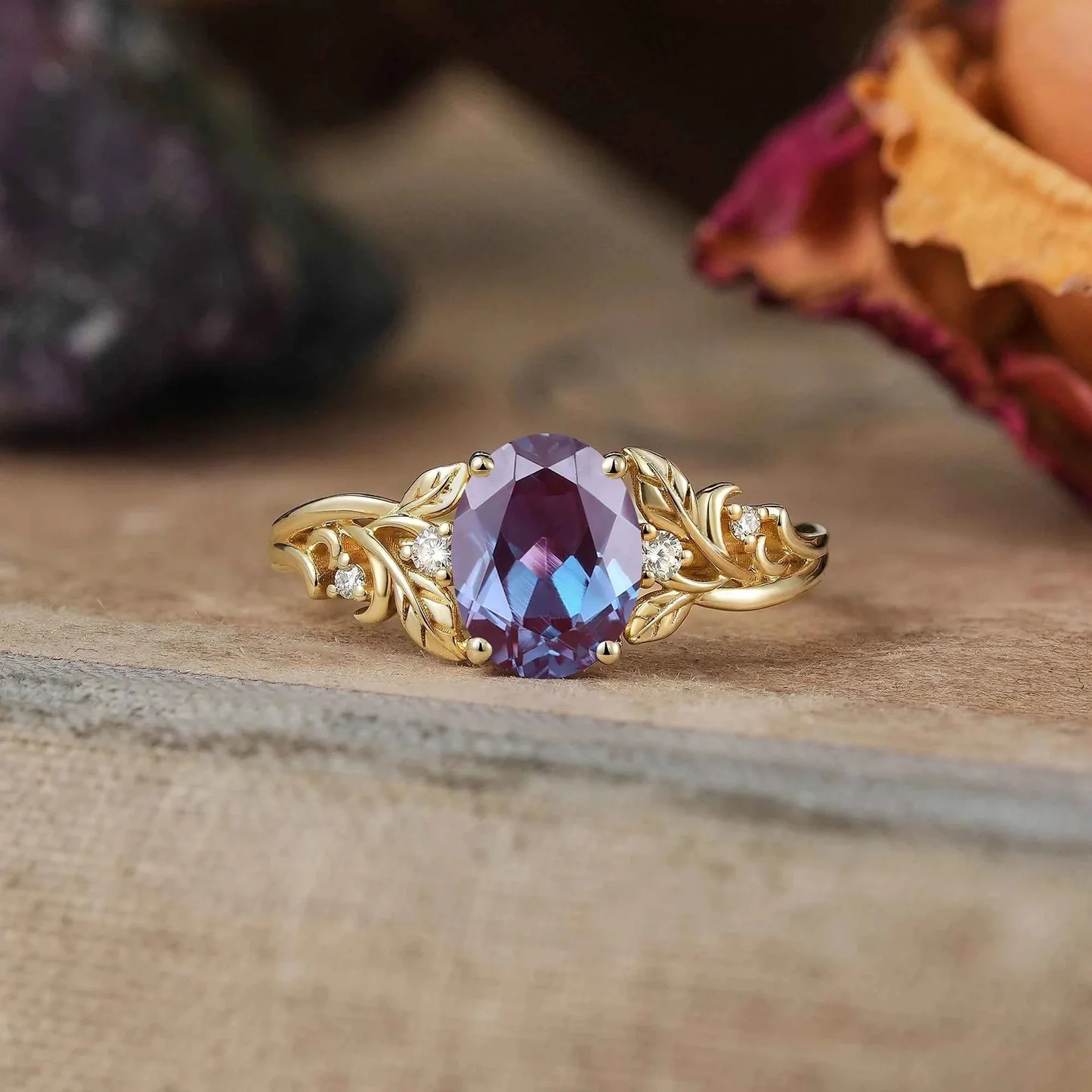
Alexandrite is a variety of the mineral chrysoberyl, and it’s best known for one thing: it doesn’t look the same in every light. In daylight or cooler light, it tends to appear greenish — sometimes a blue-green, sometimes more of a teal. In warmer or incandescent light, it shifts toward red, raspberry, or purple tones.
The degree of that shift varies depending on the stone and the specific lighting conditions. A strong color change from green to red is generally considered more desirable, but no two stones look exactly alike. That variability is part of what makes each ring feel genuinely one of a kind.
For shoppers who want a ring that feels personal rather than predictable, alexandrite rings offer a distinctive mix of color, symbolism, and movement that’s hard to find in any other gemstone.
Why Alexandrite Rings Feel So Personal
There’s a reason people describe alexandrite as a stone for people who don’t fit into a single category. It looks different depending on when you see it, where you are, and what kind of light surrounds you. That quality maps naturally onto how relationships actually work — they look different across seasons, years, and circumstances, and that’s what makes them meaningful.
People drawn to alexandrite often connect with ideas like transformation, balance, and growth. It’s a stone for someone who values individuality, who wants their jewelry to mean something specific rather than just look expensive. As a gift, it carries a quiet message: I chose this because it’s unusual, like you.
Are Alexandrite Rings Good for Engagement Rings?
They can be — and for the right person, they’re a genuinely compelling choice.
Alexandrite sits at 8.5 on the Mohs hardness scale, which makes it more durable than many colored gemstones and suitable for everyday wear with reasonable care. It’s less common than diamond, which appeals to couples who want something that stands apart from the standard options. It also pairs well with a range of settings — vintage, nature-inspired, modern minimalist, or custom designs.
That said, a few things are worth thinking through before committing:
- Setting height matters. A high-set stone catches the light beautifully but is more vulnerable to impact. If you’re active with your hands, a lower or more protective setting is worth considering.
- Care is important. Alexandrite should be cleaned gently and kept away from harsh chemicals. It’s durable, but not indestructible. Before you buy, ask the jeweler how to clean the ring safely and whether the setting is suited to your daily wear habits.
- The color-change effect varies. Ask to see the stone in different lighting before buying so you know exactly what you’re getting.
Natural vs. Lab-Created Alexandrite
This is one of the most common questions buyers have, and it deserves a straightforward answer.
Natural alexandrite is genuinely rare. High-quality stones with a strong color change are scarce, and that scarcity drives the price — natural alexandrite can be significantly more expensive than other colored gemstones of similar size.
Lab-created alexandrite is grown in controlled conditions and can exhibit a similar color-change effect at a much more accessible price point. For many buyers, it offers a practical way to enjoy the look and feel of alexandrite without the premium cost of a natural stone.
What lab-created alexandrite is not, however, is the same as natural alexandrite in terms of rarity or long-term market value. If you’re buying primarily for investment or you specifically want a natural stone, that distinction matters. If you want the color-change experience and a beautiful ring at a realistic budget, lab-created is a reasonable and legitimate option.
How to Choose the Right Alexandrite Ring
A few practical considerations that make a real difference:
- Color-change strength. Look for a stone with a noticeable shift between green and red/purple tones. Weak color change can make the stone look more like a generic green or brown stone.
- Stone shape. Round and oval cuts often show the color change most evenly. Fancy cuts can look striking but may show the effect differently.
- Metal color. White gold and platinum let the stone’s color take center stage. Yellow gold adds warmth and works especially well with vintage-style settings.
- Setting height. Decide early based on your lifestyle. Lower settings and bezel styles offer more protection for daily wear.
- Budget. Set a range before browsing, and decide whether natural or lab-created alexandrite fits within it.
- Wedding band compatibility. Some settings require a curved or custom band to sit flush. Worth asking upfront.
Where to Find Alexandrite Ring Designs
There are jewelers who specialize in colored gemstone rings, and it’s worth taking time to compare craftsmanship, gemstone sourcing, setting options, return policies, and whether customization is available.
Collections like gemsmagic jewelry can be useful for comparing stone styles, setting details, and design options in one place before deciding which direction feels right.
Are Alexandrite Rings Right for Everyone?
Not quite — and it’s worth being honest about that.
If you want a traditional diamond solitaire, a neutral stone that looks consistent in all lighting, or the absolute lowest-maintenance option, alexandrite probably isn’t the right fit. The color change is the point of the stone, and someone who finds that quality distracting rather than interesting may be happier with something else.
But if you’re drawn to color, symbolism, and a ring with a personality of its own, alexandrite can be a genuinely strong choice. It’s romantic without being conventional, eye-catching without being loud, and meaningful without needing much explanation.
Final Thoughts
Alexandrite stands out because of something relatively rare in the gemstone world — a visible color shift that changes how the stone looks depending on when and where you see it. For a lot of people, that’s exactly the point.
Before buying, think through your lifestyle, your budget, whether natural or lab-created makes more sense for you, and what setting will actually hold up to your daily life. Get the answers to those questions first, and the right ring tends to become obvious on its own.
This is a guest post.