
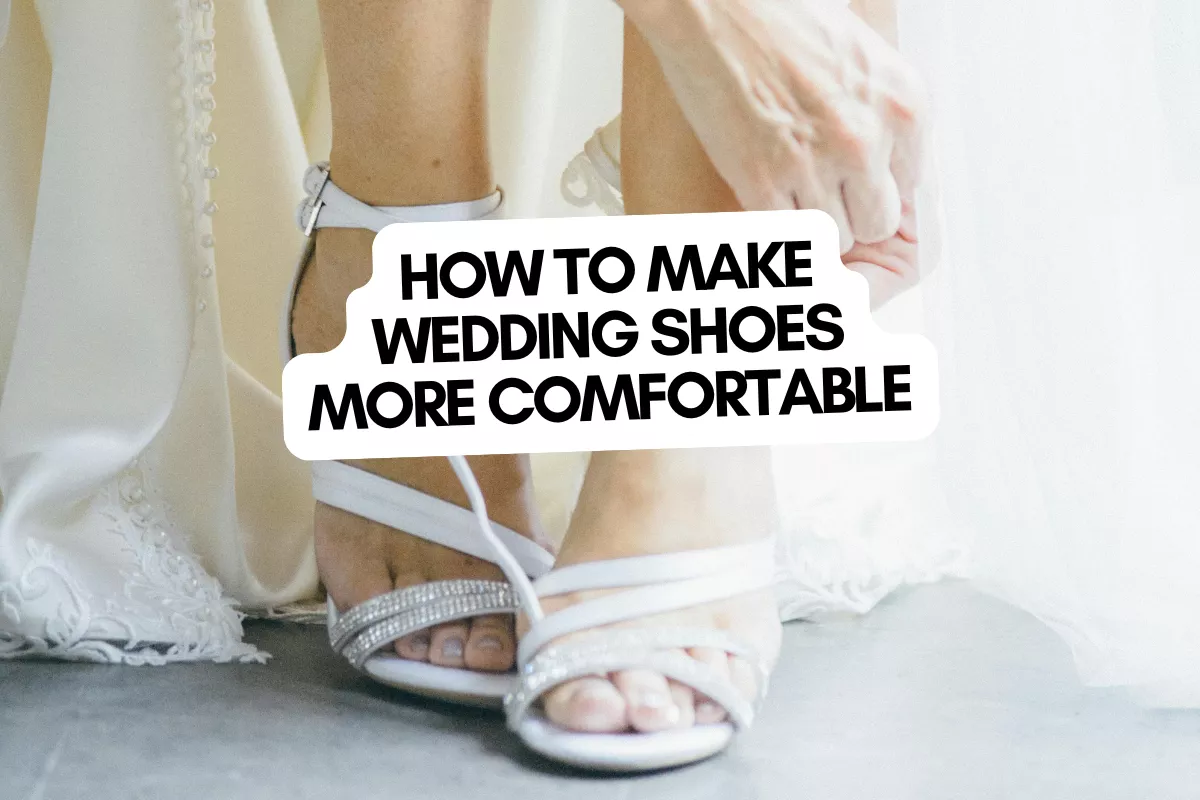
Your wedding shoes can be gorgeous, sparkly, perfectly matched to your dress… and still make you want to take them off 20 minutes into the day.
If you’re wondering how to make wedding shoes more comfortable, you’re in the right place. Whether your heels pinch your toes, rub your heels, slip when you walk, or leave the balls of your feet begging for mercy, there are a few things you can do before the big day to make them much easier to wear.
And no, you don’t necessarily have to give up the shoes you love. From breaking them in and adding cushioning to fixing a loose fit, protecting trouble spots, and knowing when it’s time to switch to your backup pair, these are the tricks that can make a long day in wedding shoes a whole lot more comfortable.
The biggest tip? Don’t wait until your wedding day to find out your shoes hurt. Put them to the test now, fix the little problems while you have time, and give your feet a fighting chance.
💗 Quick answer: The easiest ways to make wedding shoes more comfortable are to break them in before the wedding, add cushioning where you need it, protect areas that rub, fix slipping or tight spots, and have a comfortable backup pair ready for the reception. Test everything ahead of time so there are no painful surprises on the big day.
💗 Shop the Wedding Shoe Comfort Fixes
If you’re here because your wedding shoes are already hurting, start here. These are the little fixes I’d look at first depending on where your shoes are causing trouble.
- Ball of your foot hurts: cushioned ball-of-foot pads
- Heel slips: adhesive heel grips
- Back of your heel rubs: blister patches
- Shoes feel slightly loose: heel grips or cushioned insoles
- Toes feel cramped: targeted shoe stretching
- You need a reception escape plan: comfortable bridal flats or sneakers
1. Break in your wedding heels before the big day
This is the easiest thing you can do, and somehow it is also one of the things brides forget or put off until approximately three days before the wedding.
Wear your wedding heels around the house before the wedding. Start with short periods and gradually increase the amount of time you wear them.
Walk around, stand in them, go up and down stairs, and practice whatever movements you’ll actually be doing on the wedding day. You’ll quickly discover whether the back rubs, the toe box feels too tight, or the ball of your foot is in pain.
Breaking them in also helps you figure out whether you need an insert, heel grip, blister protection, or another adjustment before you’re standing at the altar.
2. Add cushioning where your feet need it most
If your heels feel fine for the first 20 minutes but start hurting after you’ve been standing for a while, cushioning can be a game changer.
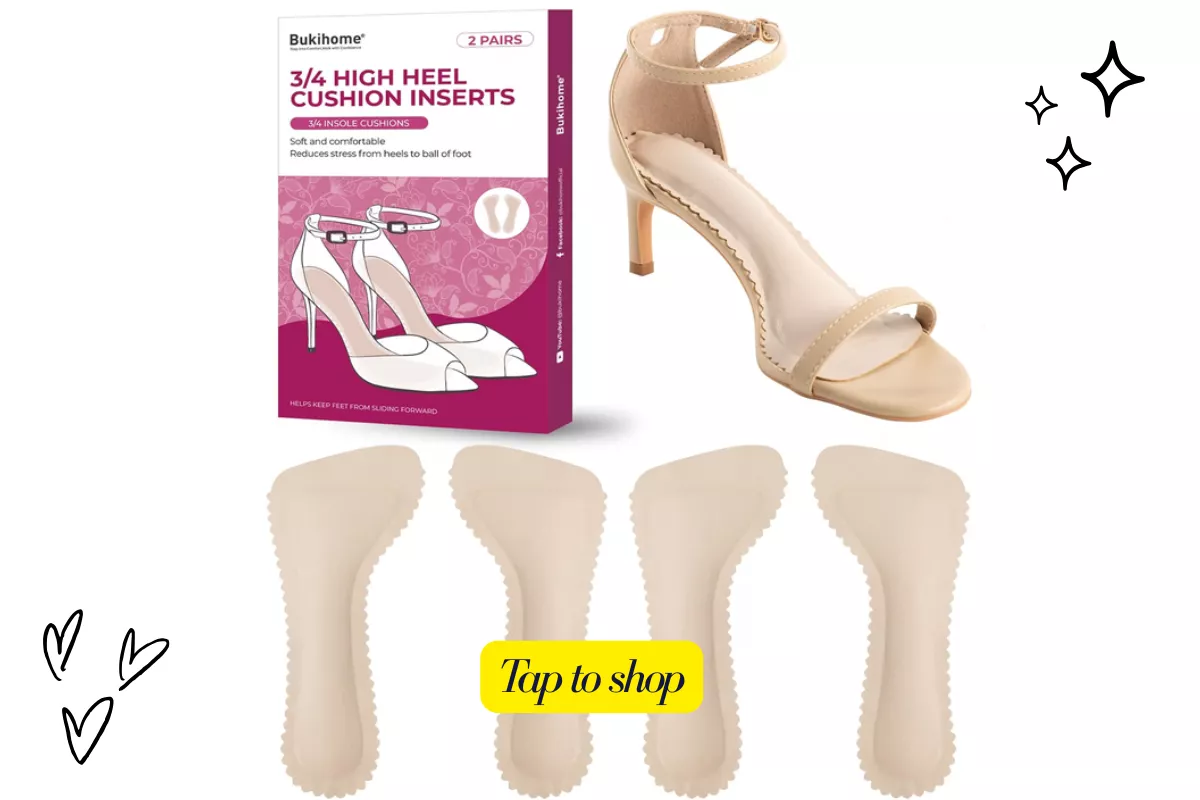
What to look for: Choose a slim, cushioned pad designed for the ball of the foot rather than a bulky insert that can make your wedding shoes feel tighter.
→ Shop cushioned ball-of-foot pads for wedding heels
Look for cushioned inserts designed for heels or small pads that sit beneath the ball of your foot. They can take some of the pressure off the areas that usually start screaming first.
You don’t necessarily need a full insole, either. A small targeted cushion can be more comfortable in a dress shoe and is less likely to make the shoe feel too tight.
Tip: Put the insert in while you’re breaking the shoes in, not the morning of your wedding. You want to make sure the fit still feels right. These are a great option for adding cushioning to wedding shoes:
3. Try heel grips if your shoes slip or rub
If your heels keep slipping at the back, your shoe may be rubbing your heel with every single step. That repeated friction can turn into a blister very quickly.
Adhesive heel grips can help create a little extra padding and reduce movement inside the shoe.
They’re especially useful if the shoe fits everywhere else but has just a little extra room around the heel. For tried-and-true faves, I think these are the best heel grips for wedding shoes:
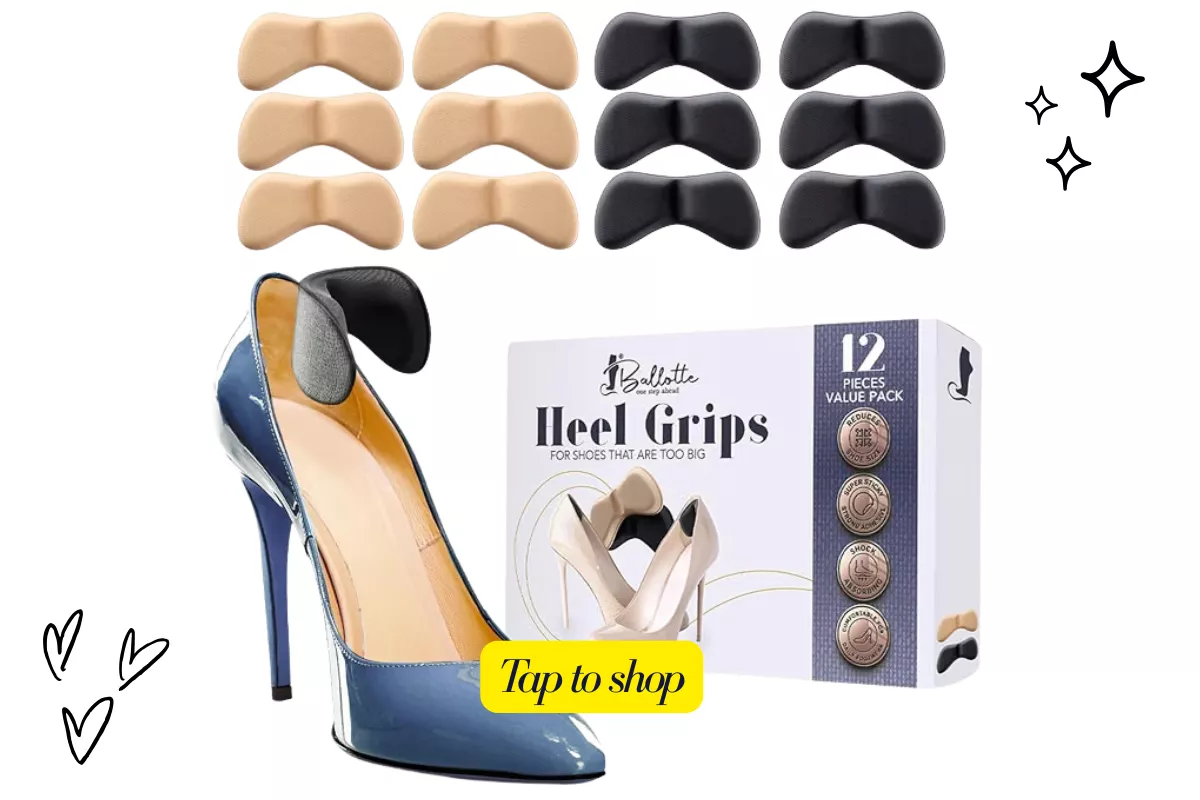
Best for: wedding shoes that fit everywhere else but have just a little extra room around the heel.
→ Shop wedding shoe heel grips
4. Protect your feet before a blister appears
Here’s a wedding-day rule I recommend: don’t wait for a blister to form before doing something about it.
If you know a particular part of the shoe rubs, protect that area before you put the shoes on.
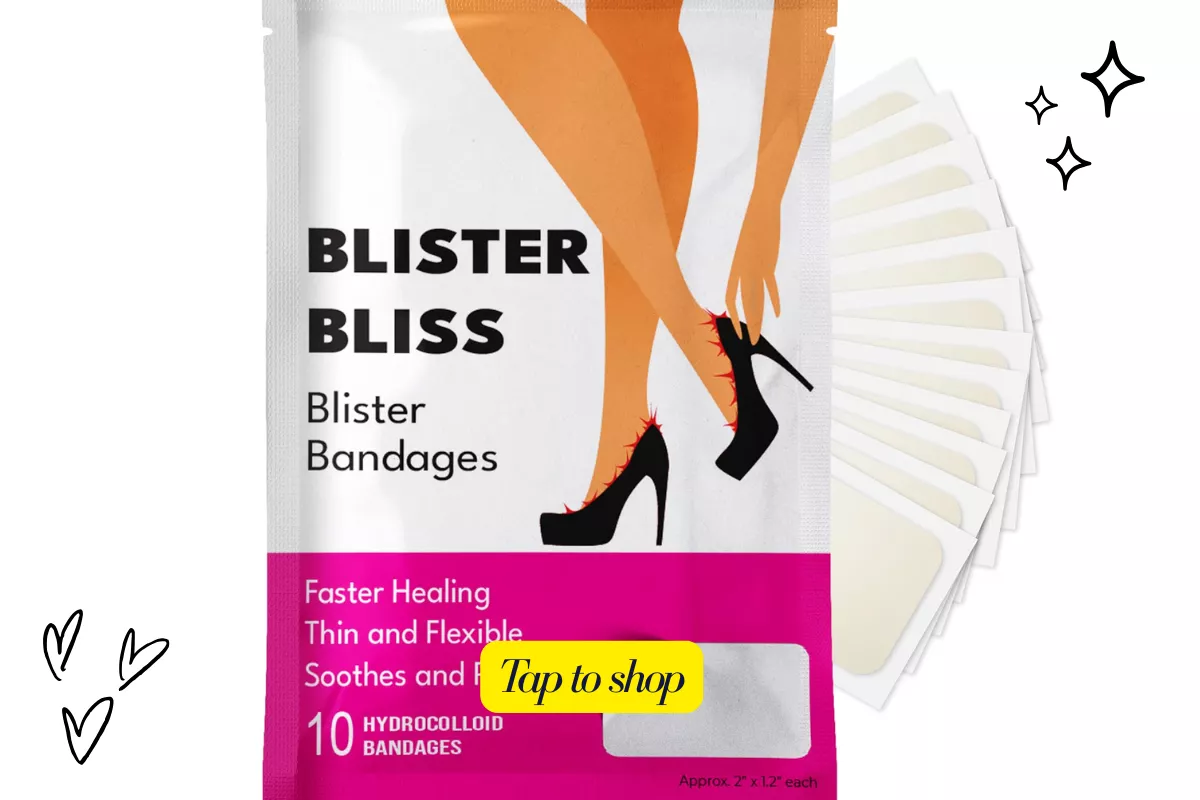
Blister-prevention patches, moleskin, or an anti-friction product can help reduce rubbing in problem areas. Keep a few extras in your wedding day emergency kit, too, because somebody in the bridal party will inevitably need them.
And yes, this is one of those tiny wedding-day details that sounds unnecessary until you are limping toward the dance floor. And don’t just guess on which one works. I’ve found these to be the best blister prevention for wedding shoes:
5. Don’t ignore the ball of your foot
For many brides, the biggest problem with high heels isn’t the heel itself, but the pressure concentrated under the front of the foot.
That’s where a cushioned ball-of-foot pad can help.
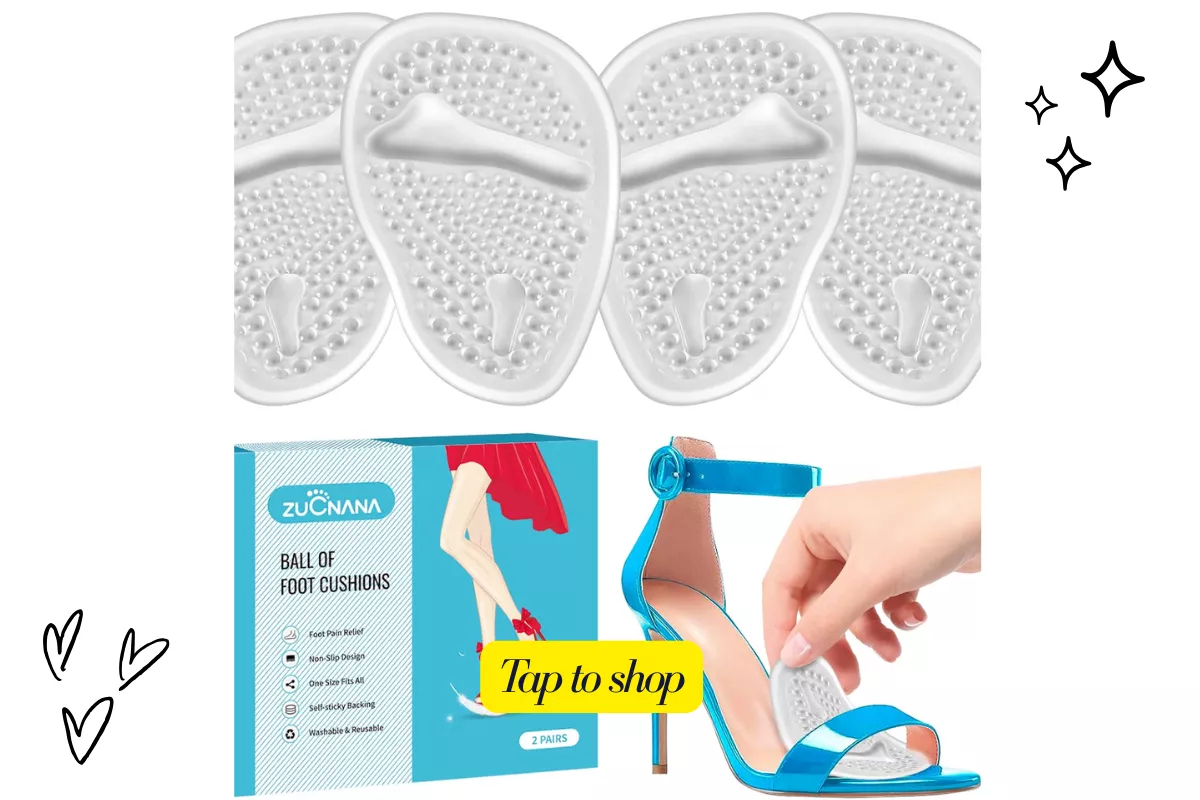
These small inserts are designed specifically for the area that takes a lot of pressure when you’re wearing heels. They’re also easier to fit into many dress shoes than a bulky full-length insole.
If your shoes feel comfortable when you’re sitting but miserable once you’re standing and walking, this is one of the first things I’d try. For comfort, these are the best cushions for wedding heels:
6. Give your toes a little room
A beautiful pointed-toe wedding shoe can look amazing with a gown, but if your toes are being squeezed together for eight hours, your feet aren’t going to be too happy.
When shopping for wedding heels, pay attention to the shape of the toe box. You want your toes to have enough room to sit naturally without your foot sliding forward.
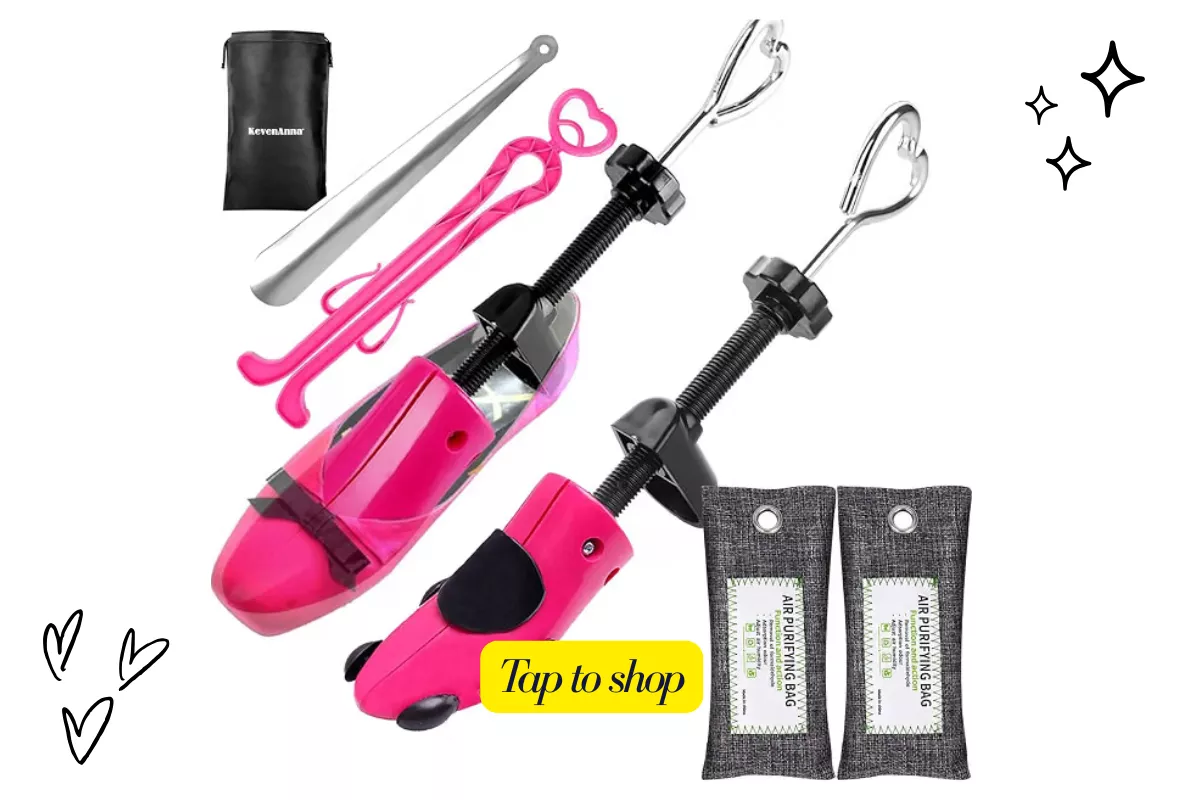
If you already own the shoes, test them while standing rather than only trying them on while seated. Your feet can spread and change shape slightly when you’re putting weight on them.If needed, use a shoe stretcher in that area of the toe to give your toes a little breathing room. Need a suggestion? This is the best shoe stretcher for heels that I’ve found:
7. Consider a block heel instead of a stiletto
You don’t have to wear a sky-high stiletto to get that dressed-up bridal look.
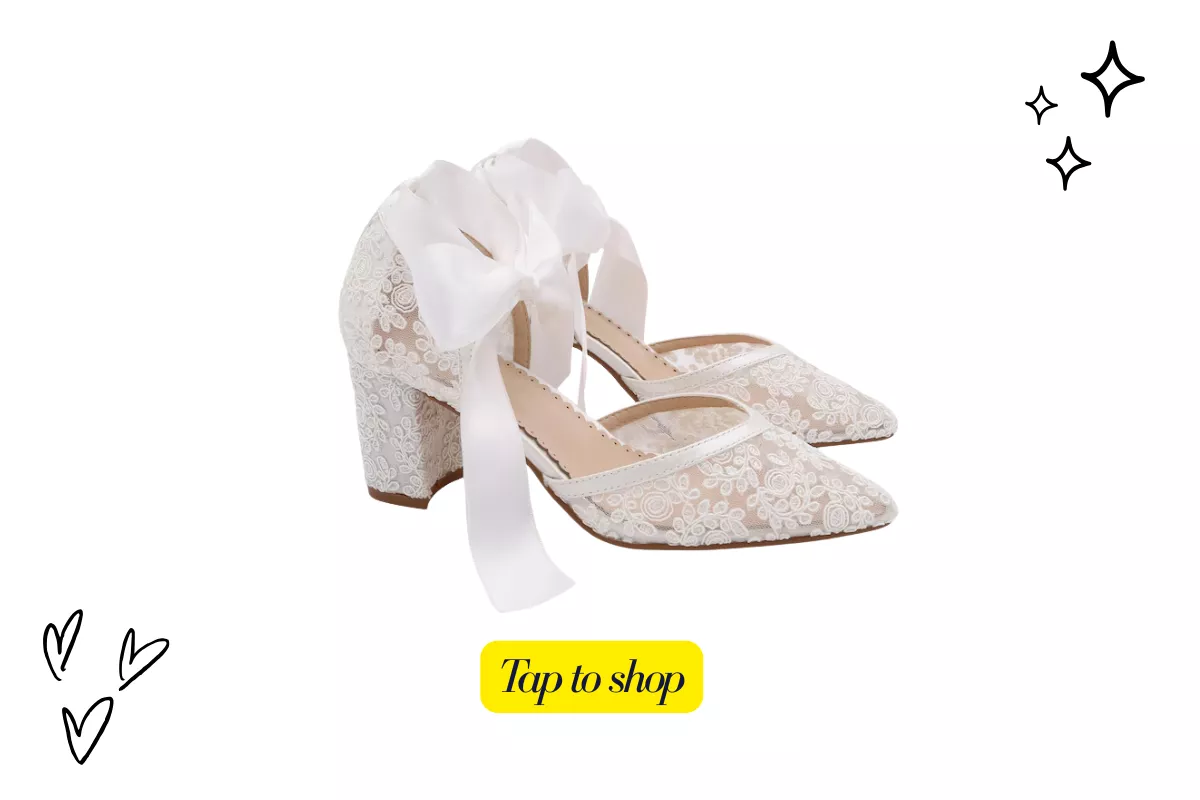
A block heel can give you more stability while still looking beautiful with a wedding dress. A lower heel can also be easier to tolerate over a long day than a very high heel.
If you’re still shopping, think about how long you’ll realistically be wearing the shoes. Ceremony plus photos plus cocktail hour plus reception can add up to several hours on your feet.
Pick the shoes you’ll be happiest wearing at 10 p.m. whether that means heels, flats, slides, or bridal boots. I have this pair of comfortable wedding heels:
8. Practice walking on your actual wedding-day surfaces
Your living room floor is not the same thing as a church aisle, grass, gravel, hardwood dance floor, or uneven outdoor venue.
If you know you’ll be walking outside, practice carefully on a similar surface before the wedding.
Outdoor weddings deserve extra attention because thin heels can sink into grass, and uneven surfaces can make even a comfortable shoe much harder to walk in.
If you’re getting married outdoors, consider heel protectors designed to give a narrow heel a wider base. There are so many of these on the market, but these are the best heel protectors for outdoor weddings:
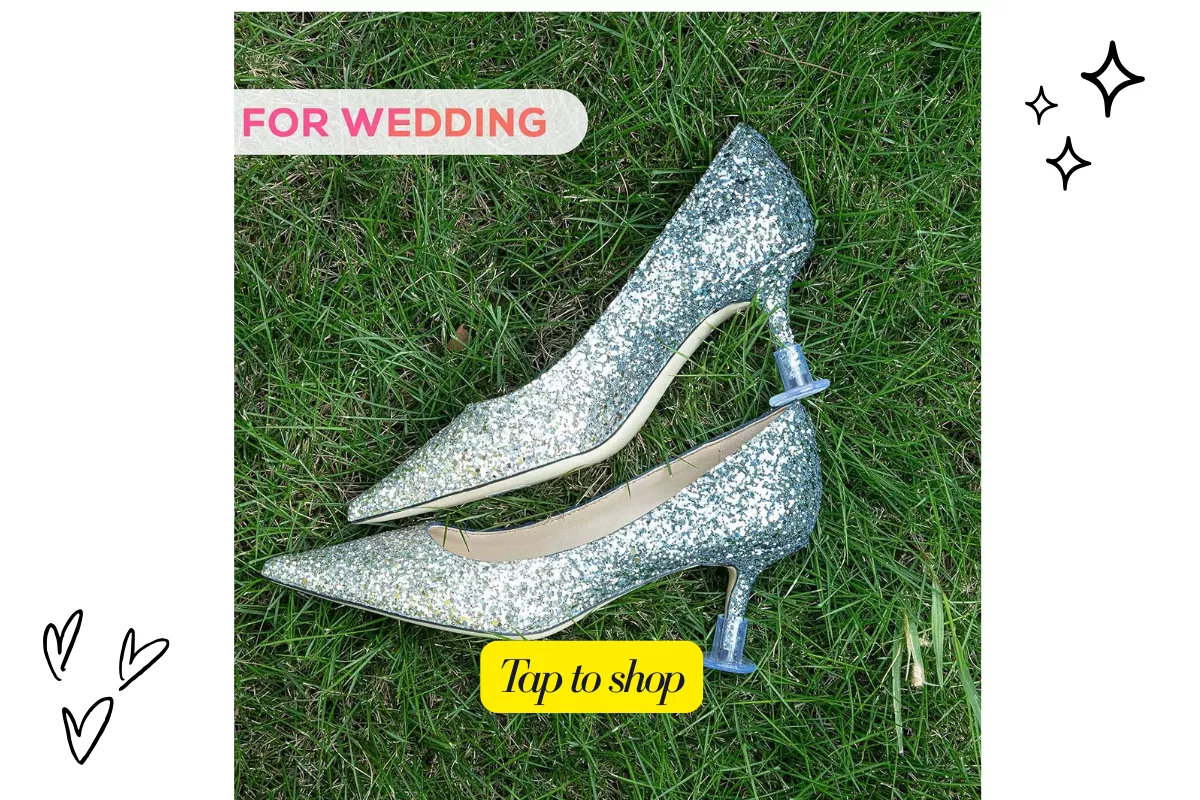
They’re especially helpful for:
- Garden weddings
- Vineyard weddings
- Beach or lawn ceremonies
- Outdoor cocktail hours
- Grass wedding photo locations
- Outdoor receptions with uneven ground
👠 Bridal shoe tip:
Don’t wait until you arrive at the venue to try them. Put the heel protectors on your shoes beforehand and walk around in them so you know they fit securely and don’t change the way your shoes feel.
→ Shop heel protectors for wedding shoes
And if you’re wearing your heels for several hours, remember that heel protectors solve one specific problem: walking on soft or uneven ground. They won’t make an uncomfortable shoe comfortable. Start with a shoe that fits well, then use heel protectors as a temporary solution for grass and gravel.
9. Don’t wear brand-new heels for the first time on your wedding day
I know. They look so good straight out of the box.
But wedding day is not the time for an experiment.
Wear them beforehand so you can discover problems while you still have time to fix them. If the shoes pinch, slip, rub, or make your feet hurt after 30 minutes at home, imagine how they’ll feel after several hours of wedding festivities.
And if they still aren’t comfortable after you’ve tried reasonable adjustments, believe the shoes. They are telling you something.
10. Bring a backup pair for the reception
If you take one tip from this list, let it be this one: bring a pair of backup flats to the reception.
You can wear your gorgeous wedding heels for the ceremony, portraits, and whatever portion of the reception you want. Then, when your feet have had enough, change into something more comfortable.
Think:
- Foldable flats
- Pretty ballet flats
- Low block heels
- Dressy slides
- Clean white sneakers if that’s more your style
- A comfortable pair of shoes you already own that you can wear for hours
Put them somewhere easy to reach. You do not want to discover at 9:30 p.m. that your backup shoes are buried underneath three bridesmaid bags and somebody’s emergency sewing kit. I’ve found these to be highly rated backup shoes for brides:
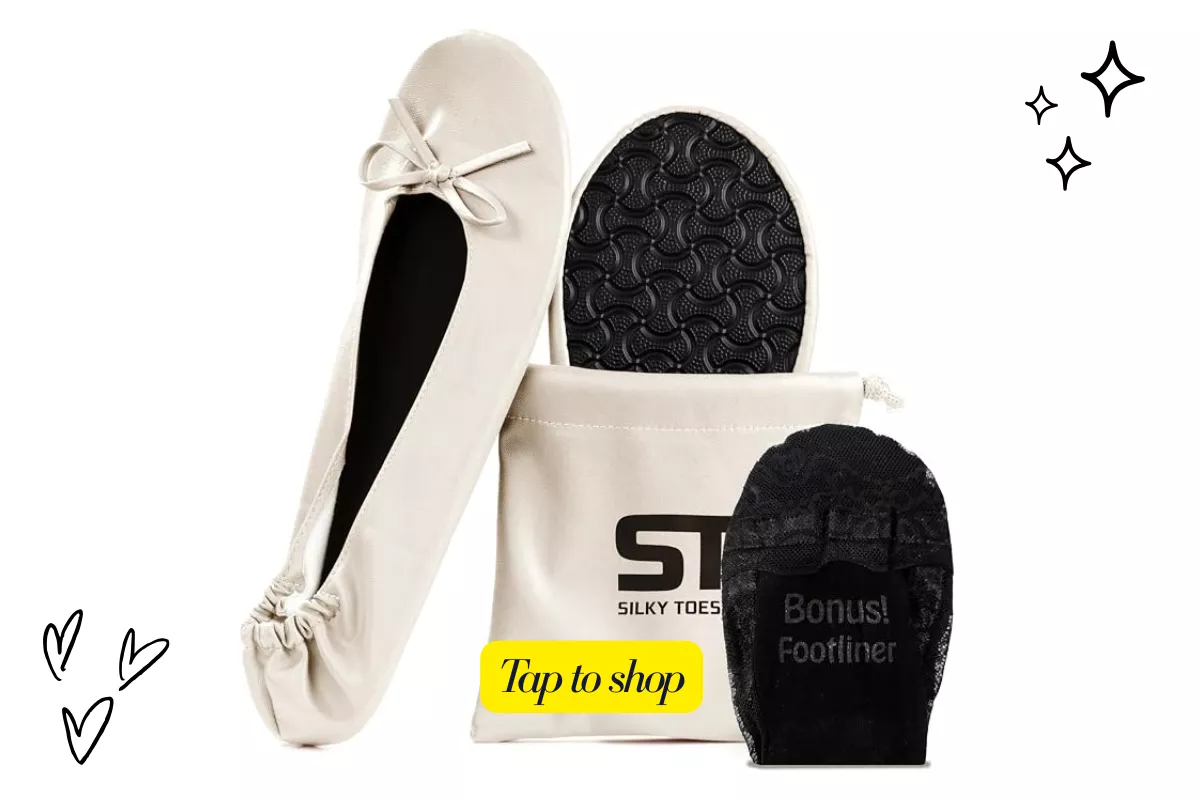
Shop Comfortable Wedding Reception Shoes
If you already know you’ll want to change shoes later, don’t wait until your feet are screaming. Pick your backup pair while you’re still shopping for your wedding shoes. It can be a pair of comfortable bridal flats, ballet flats, or slip-on shoes.
Look for something you’ll genuinely want to wear for several hours, not just the cheapest emergency flats you can shove into your bridal bag.
→ Shop comfortable wedding reception shoes
11. Make a tiny wedding shoe emergency kit
If your feet are your biggest concern, make a little kit specifically for your shoes.
Wedding Shoe Emergency Kit
You don’t need every product on this list. Start with the problem you’re having. If your heel slips, try heel grips. If the ball of your foot hurts, try a cushion. If the shoe is fundamentally the wrong size, replace the shoe rather than trying to build an orthopedic device inside it. 😂
- Blister patches
- Heel grips
- Ball-of-foot cushions
- Extra inserts
- Moleskin
- Anti-friction balm
- Your backup shoes
Keep everything together so your maid of honor or another trusted person can grab it for you without having to search through your entire getting-ready room.
I put together the ultimate shoe emergency kit list. Shop all of the wedding day shoe essentials here →
👠 Emma’s wedding shoe rule:
Your wedding shoes should be beautiful, yes, but they also need to survive the actual wedding. If you can barely walk in them after 30 minutes at home, don’t convince yourself you’ll magically be fine after six hours of standing. Your feet have spoken!
If You Haven’t Bought Your Wedding Shoes Yet…
If you’re still shopping, don’t buy a pair simply because they’re pretty in the photo. Look for a comfortable fit from the beginning.
- Roomy enough toe box
- Secure heel
- Stable heel or sole
- Cushioning where you need it
- Height you can realistically wear for several hours
- A style that works with your dress length
And here’s my favorite shortcut: if you already know you’re not a heels-all-day person, shop for your ceremony shoes and your reception shoes as two separate decisions.
→ Shop comfortable wedding shoes for brides
What is the most comfortable heel height for a wedding?
There isn’t one magic heel height that works for every bride. Your comfort depends on the shoe’s shape, fit, heel design, cushioning, and how accustomed you are to wearing heels.
That said, a lower heel or stable block heel is often easier to wear for an extended period than a very high, narrow heel.
If you’re not normally a heels person, your wedding probably isn’t the day to suddenly debut a four-inch stiletto.
How to Make Tight Wedding Shoes More Comfortable
If your wedding shoes are the right length but feel too tight across your toes or the sides of your feet, you may be able to improve the fit before the big day.
A shoe stretcher can help with certain pressure points, particularly when the problem is width rather than length. You can also have delicate or expensive wedding shoes professionally stretched if you’re nervous about doing it yourself.
One important rule: don’t wait until the night before your wedding to experiment with stretching. Give yourself plenty of time to test the shoes afterward and make sure they still fit securely.
And remember: stretching can help with a shoe that’s slightly too snug. It can’t turn a fundamentally wrong size into a comfortable shoe.
👠 If your wedding shoes are too tight
A shoe stretcher can be useful when the problem is a specific pressure point or width issue. Just give yourself plenty of time to test the shoes afterward.
What to Do If Your Wedding Shoes Are Too Big
Too much room can be just as annoying as shoes that are too tight. If your heel keeps slipping or your foot slides forward every time you walk, the extra movement can cause rubbing and blisters.
Try a heel grip, cushioned insole, or ball-of-foot cushion depending on where you have extra space. If the shoe is only slightly too loose, one small adjustment may be enough to make it feel much more secure.
Test any insert before the wedding, though. Adding too much padding can make your toes feel cramped or change the way your foot sits in the shoe.
How to Make Wedding Shoes With Straps More Comfortable
Straps are supposed to keep your shoes securely on your feet, not slowly become your personal enemy.
If an ankle strap or toe strap is rubbing, check the fit before the wedding. It shouldn’t be so tight that it’s digging into your skin, but it also shouldn’t be loose enough for your foot to slide around.
Wear the shoes around the house and pay attention to exactly where the strap starts bothering you. Apply some anti-friction balm to help in a problem area.
Don’t wait until the wedding day to discover that one tiny strap is going to rub your ankle raw. Your future self will thank you.
Practice Wearing Your Wedding Shoes With Your Dress
Walking around your living room in your wedding shoes is helpful. Walking around in your actual wedding shoes with your actual dress is even better.
Before the wedding, put on your shoes and practice:
- Walking normally
- Standing for several minutes
- Sitting and standing back up
- Walking up and down stairs
- Getting in and out of a car
- Walking while holding your bouquet
- Moving around in your dress
- Dancing
This is also a great way to discover whether your dress length feels right with your chosen heel height.
If your wedding will include outdoor photos, a church aisle, grass, gravel, or another unusual surface, practice carefully on something similar, too.
How to Make Wedding Heels More Comfortable for Standing All Day
Standing can be harder on your feet than walking, especially when you’re wearing heels for hours.
Whenever you have the opportunity, sit down for a few minutes and give your feet a break. During photos, cocktail hour, or other stretches of downtime, you don’t have to spend every second standing just because you’re the bride.
It can also help to shift your weight instead of standing completely still for long periods. And if you know your reception will involve hours of dancing and standing, consider changing into your backup shoes before your feet are already miserable.
The goal isn’t to see how long you can tolerate your wedding shoes. The goal is to enjoy your wedding day in them.
When You Should Replace Your Wedding Shoes
Sometimes a shoe just isn’t going to work. And that’s okay.
If your wedding shoes are the wrong size, severely pinch your toes, make your feet hurt almost immediately, or still feel painful after you’ve tried reasonable adjustments, don’t feel like you have to suffer through it.
Inserts, heel grips, blister protection, and stretching can help with specific fit problems. They can’t fix every uncomfortable shoe.
If your shoes are making it difficult to walk comfortably before the wedding, it’s worth finding another pair while you still have time.
Wedding shoes are supposed to finish your bridal look, not ruin your feet.
Wedding Shoe Pain? Try This First
Not sure what you need? Start with the problem your wedding shoes are giving you. You don’t need to buy everything below. Just find your trouble spot and choose the fix that makes sense for your shoes.
| If your wedding shoes hurt… | Try this first |
|---|---|
| Ball of your foot hurts | Try a cushioned ball-of-foot pad |
| Heel keeps slipping | Try adhesive heel grips |
| Back of heel rubs | Use a blister patch, moleskin, or anti-friction product |
| Toes feel cramped | Check the toe box and consider targeted stretching |
| Ankle strap digs in | Adjust the strap and protect the rubbing area |
| Shoe feels slightly too big | Try a heel grip, thin insole, or ball-of-foot cushion |
| Shoes feel tight across the toes | Consider targeted shoe stretching |
| Feet hurt after standing | Add cushioning and take sitting breaks when possible |
| Heels sink into grass | Use heel protectors designed for outdoor surfaces |
| Everything hurts after several hours | Change into your comfortable backup shoes |
What if my wedding heels are still uncomfortable?
If you’ve broken them in, added appropriate cushioning, protected the areas that rub, and adjusted the fit but your feet are still miserable, I’d stop trying to make the shoe happen.
Seriously.
You have enough things to think about on your wedding day. Your shoes should not be one of them.
Switch to a more comfortable pair, especially for the reception. You can still get beautiful bridal shoes without sacrificing your ability to walk, dance, and enjoy the night.
If you’re still shopping, start with our guide to comfortable wedding shoes for brides and look for a pair that fits your foot well from the beginning.
Wedding heel comfort checklist
Before your wedding, make sure you’ve checked these off:
- ☐ Worn your heels around the house
- ☐ Tested them while standing and walking
- ☐ Added cushioning if needed
- ☐ Tested heel grips or blister protection
- ☐ Checked the fit of the toe box
- ☐ Practiced on your wedding-day surfaces
- ☐ Packed blister patches
- ☐ Packed a backup pair of shoes
- ☐ Made sure your backup shoes are actually comfortable
Shop the Wedding Shoe Comfort Fixes
Before you walk down the aisle, stock your bridal emergency kit with the little things that can make a surprisingly big difference.
- Blister patches
- Heel grips
- Ball-of-foot cushions
- Extra inserts
- Moleskin
- Anti-friction balm
- Comfortable reception shoes
Because here’s the thing: you don’t get extra bridal points for suffering through your shoes. Wear the pretty heels. Wear the sparkly flats. Change shoes halfway through the night. Do whatever lets you enjoy your wedding instead of secretly counting the minutes until you can take your shoes off.
Happy Planning!
xo
Emma